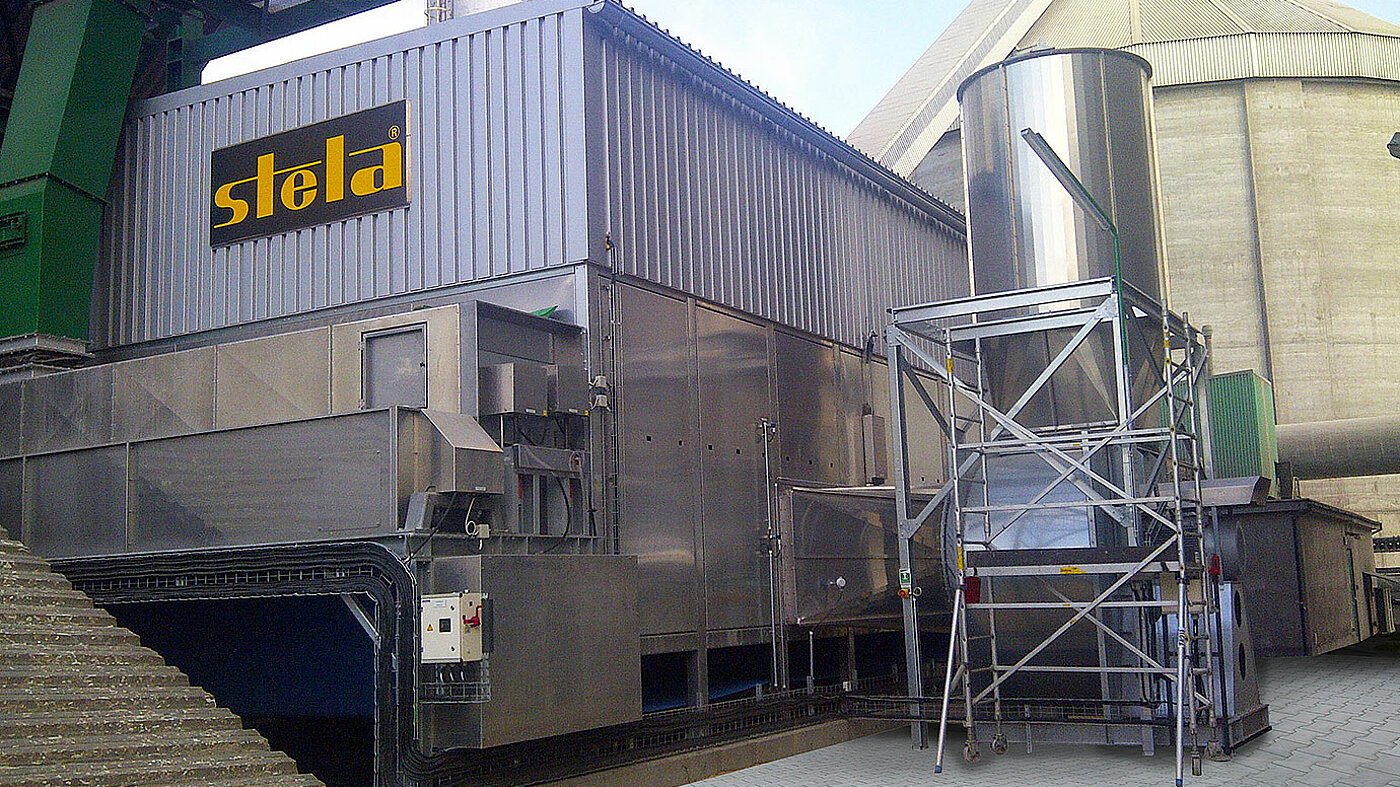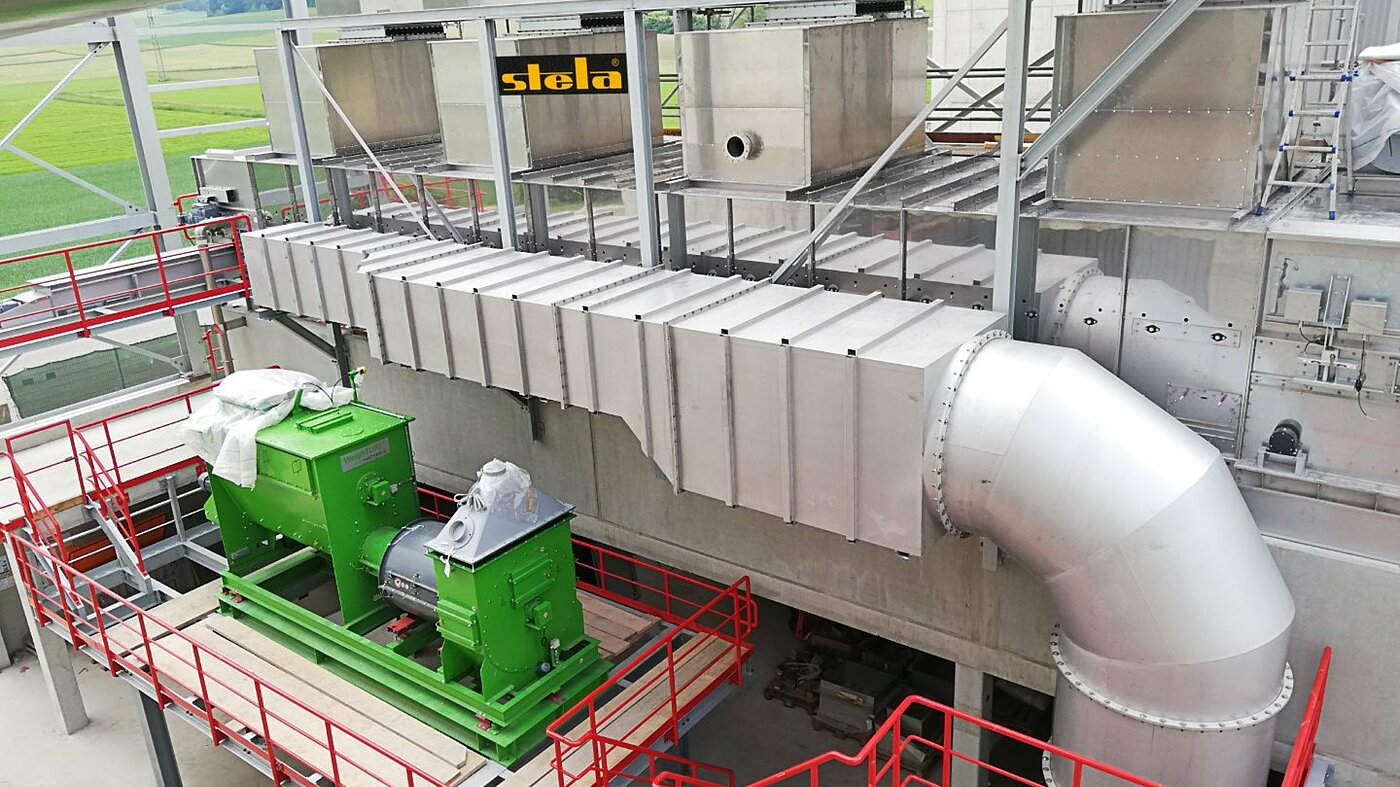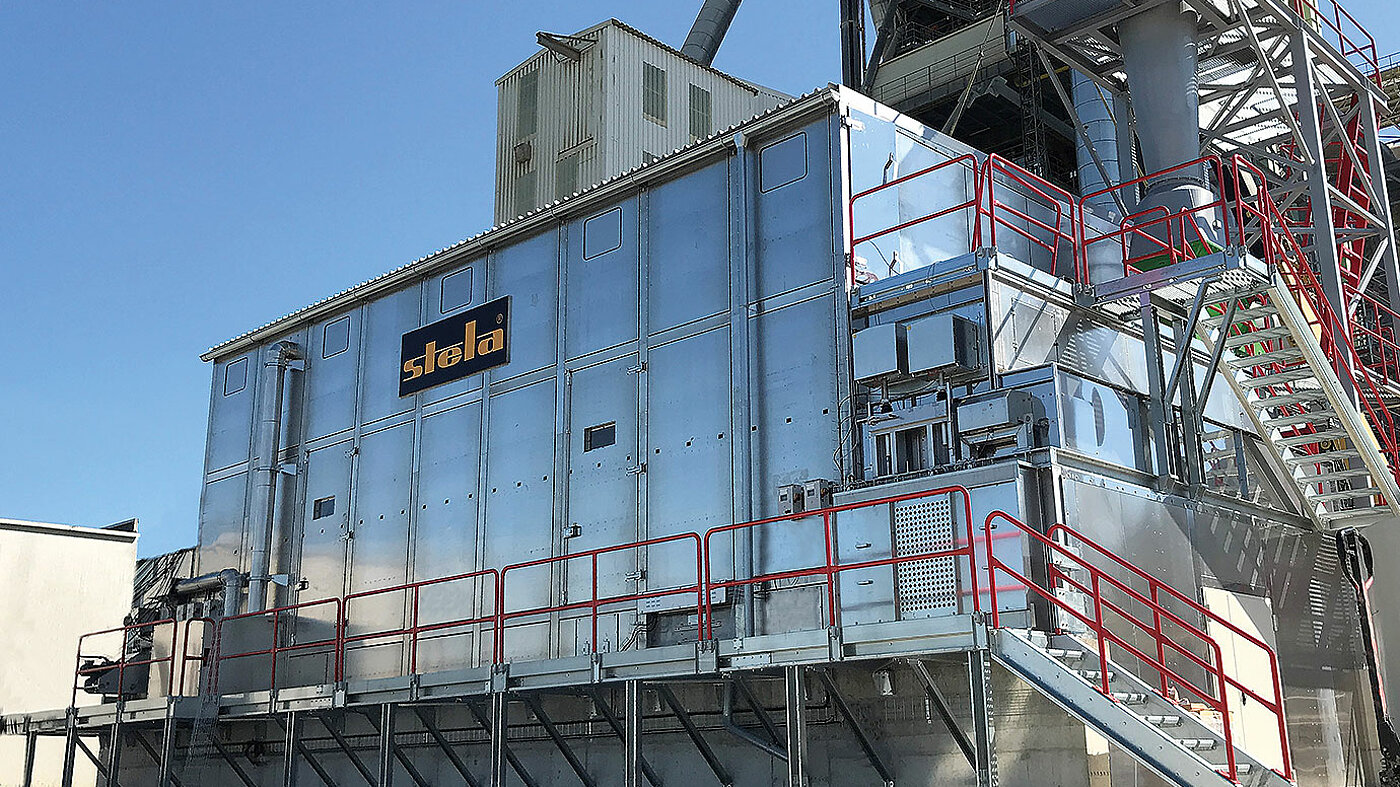





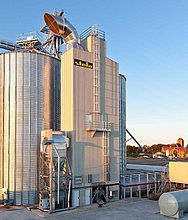
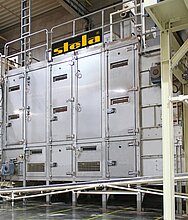
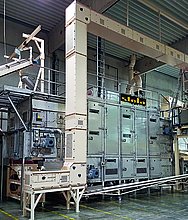
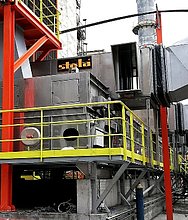
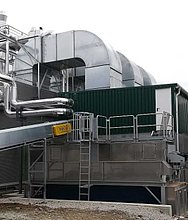
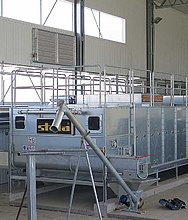
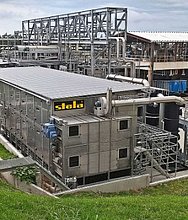
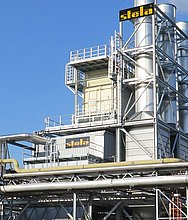
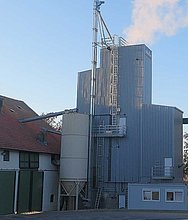
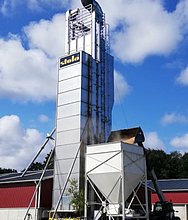

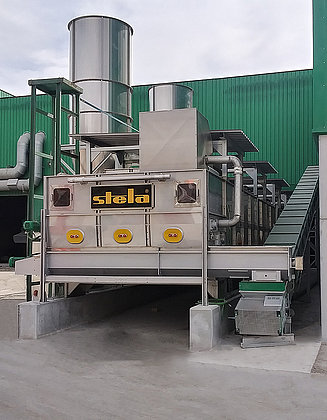
Mobile circulating dryer for maize and grain
in Germany
Dryer type: MUF 170
Dryer output capacity:
maize: 44.0 t/24h from 35% to 15%
grain: 264.0 t/24h from 19% to 15%
The cement industry is one of the most energy-intensive industrial sectors worldwide – and is under increasing pressure to replace fossil fuels with alternatives and thus reduce its CO₂ footprint. Alternative fuels such as RDF, SSW, SRF or Fluff are a central building block of modern and economical clinker production.
To use these materials stably and reliably in the rotary kiln, they must have a defined, uniform moisture content. This is exactly what STELA Laxhuber’s drying technology delivers: low-temperature belt dryers that use waste heat from the cement production process, run robustly in 24/7 operation and are individually designed for the respective material.

Producing cement requires enormous quantities of thermal energy – typically 3,000 to 4,000 MJ per tonne of clinker. Historically, this demand was met almost exclusively by fossil fuels such as coal, petroleum coke or natural gas. In view of rising CO₂ costs and regulatory requirements, many plants are increasingly shifting their energy mix toward alternative fuels.
The substitution rate in leading European cement plants today is between 60 and over 80 percent. The prerequisite, however, is that the fuels have a constant quality – particularly with regard to moisture and calorific value. Material that is too moist leads to volatility problems in the kiln, reduces the flame temperature and can impair clinker quality. Drying the alternative fuels is therefore not an optional add-on, but a process-engineering necessity.
Typical input materials in cement plants:

A decisive competitive advantage of STELA drying plants in cement works lies in the consistent use of available waste heat. Cement plants usually have several suitable heat sources:
Depending on the site, the heating media used are process air from upstream processes, but also thermal oil, saturated steam or warm water. Through integration into existing energy systems, the drying plants operate almost cost-neutrally during ongoing operation – the investment in drying typically pays for itself through the saved fuel costs, the additional revenue from higher-quality alternative fuels and the CO₂ savings achieved.
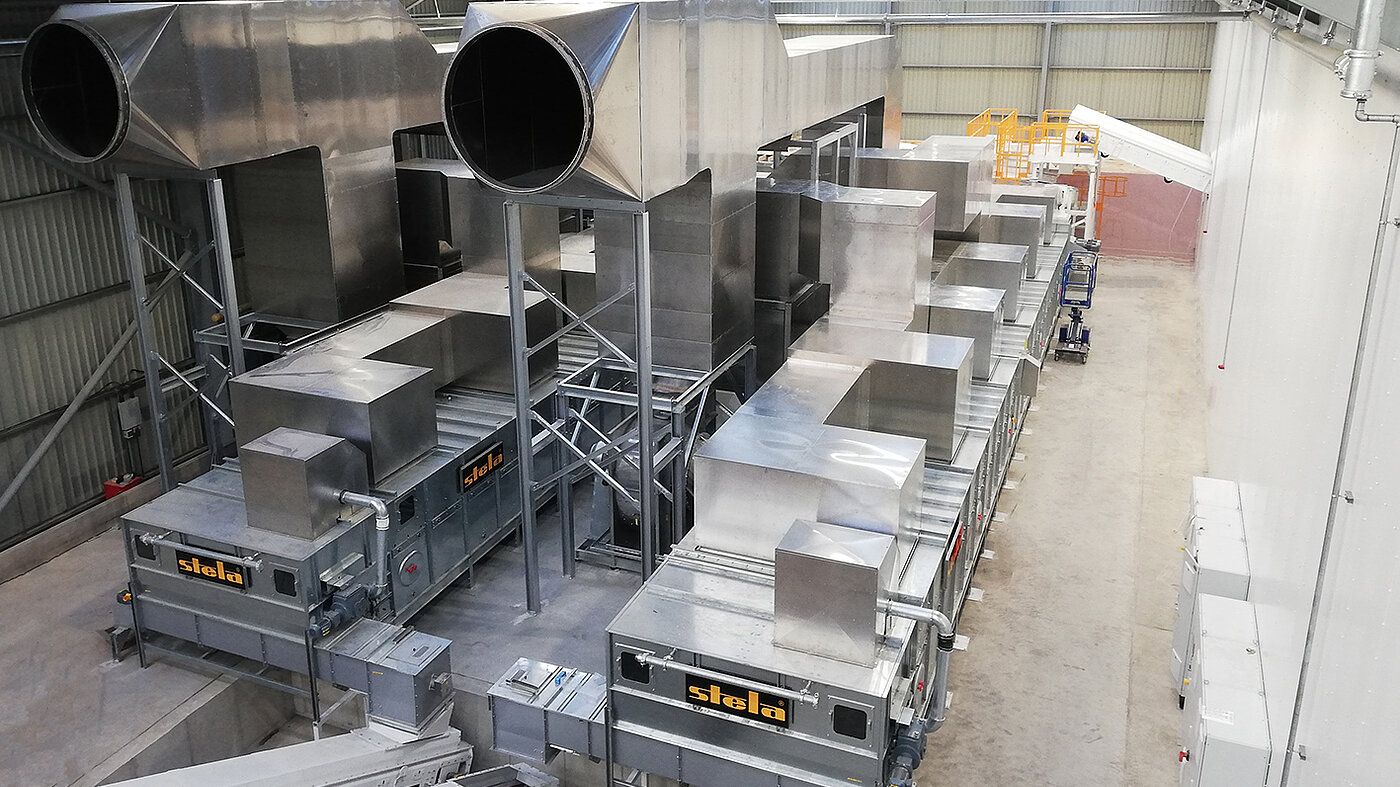
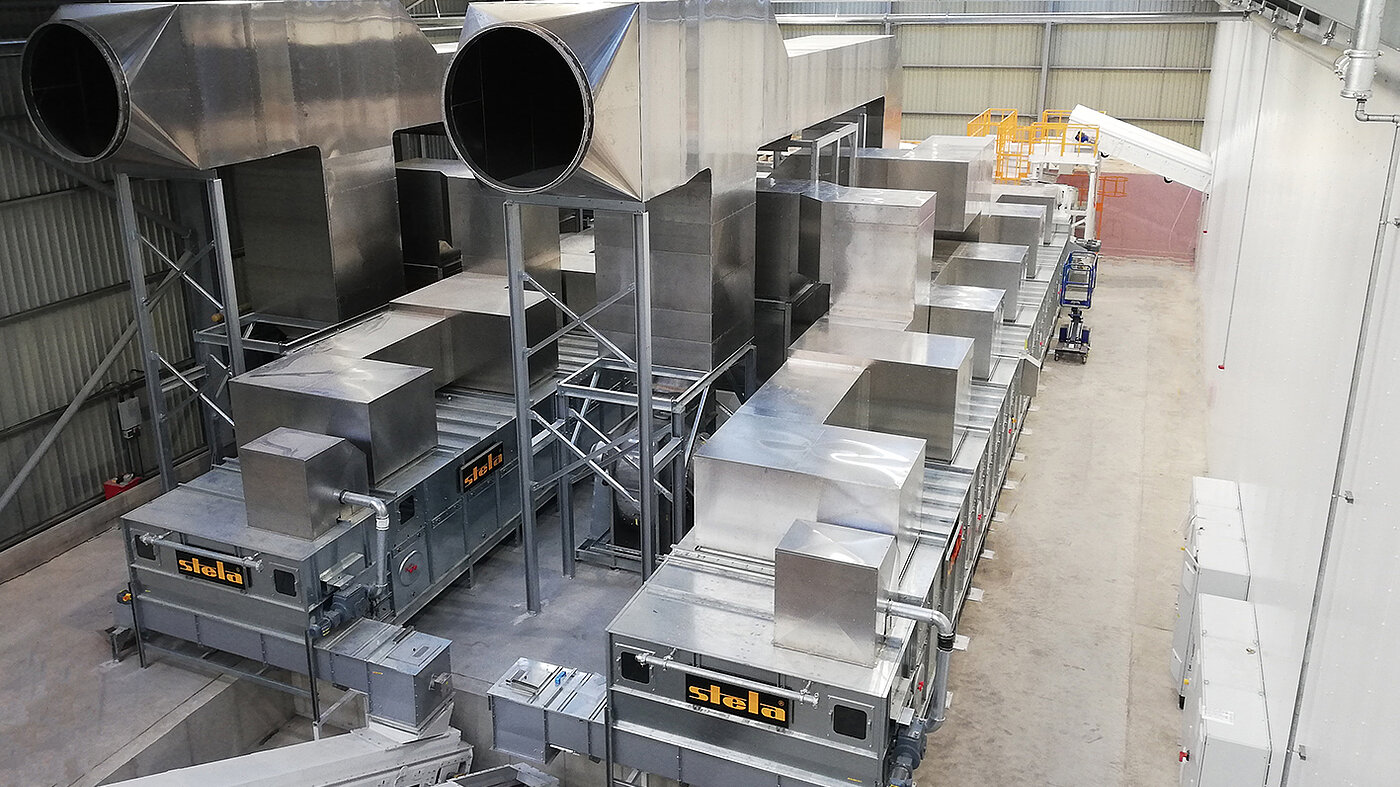
STELA offers two proven low-temperature belt-dryer series for fuel pre-drying, both based on the same process-engineering principle: fresh air is heated via a heating register and drawn from above through an air-permeable drying belt. In doing so, it extracts the moisture from the material; the moisture-laden exhaust air is discharged downward. The material is fed evenly onto the belt via a double distribution screw.
Belt dryer type BT – for high throughputs
The BT is the high-performance variant and is aimed at cement plants with a large fuel demand. It is available in belt widths of 6,200 mm and 8,400 mm and works with several drying zones connected in series, which allow individually adjustable process temperatures along the drying section. The plant processes up to 60 t/h of drying product. Thanks to its closed, insulated construction, it is designed for year-round operation – even at outside temperatures down to −40 °C.
Belt dryer type BTL – for small and medium throughputs
The BTL is manufactured in belt widths of 2,000 mm and 3,000 mm and is particularly suited to plants with lower or variable fuel demand, for getting started with alternative fuel drying or for decentralized drying concepts. Despite its more compact size, the BTL offers all the advantages of STELA low-temperature technology: uniform drying, gentle material handling, robust construction and easy maintenance.
Both series feature a modular design and can be configured with various heating media and additional options (e.g., automatic humidity control, explosion protection based on the CE risk assessment).
Alternative fuels are not a uniform material class – their properties can vary considerably depending on source, processing and season. STELA accounts for this through individual design and specific safety measures:
No cement plant is like another. Moisture content, material composition, available heat sources and throughput requirements vary widely. That is why STELA develops each plant on the basis of a comprehensive analysis.
Where necessary, drying trials are carried out in advance in the company’s own technical center in Massing (Bavaria) to determine exact drying curves and to define the optimal plant configuration. This ensures not only precise dimensioning but also planning reliability for the customer: the plant meets the agreed performance parameters from the very first day of operation.
How other cement plants have solved the challenges of alternative fuel drying – and what STELA contributed:
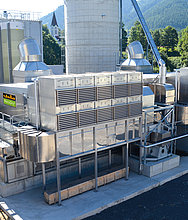
SCHWENK Zement, Allmendingen – waste-heat utilization with a tailor-made belt dryer
At the Allmendingen site, SCHWENK Zement wanted to tap the previously unused waste heat from clinker cooling for RDF drying – in extremely confined space conditions. STELA developed a fundamentally redesigned variant of the BT 1/6200-13.5 belt dryer, which could be realized despite the spatial restrictions. The result: more than 8.5 million kWh of energy savings per year and more than 13,200 tonnes of CO₂ savings at the site.

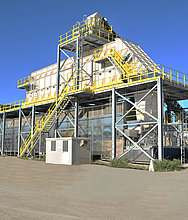
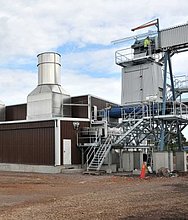
Finnsementti OY, Parainen (Finland) – RDF drying on the building roof
Finnsementti OY, a company of the CRH Group, wanted to use RDF made from Finnish plastic waste as an alternative fuel in the rotary kiln at its Parainen site – and that under exceptional conditions: the BT 1/6200-12 belt dryer had to be installed on the roof of an operating building, at temperatures down to −20 °C and in compliance with strict Scandinavian safety regulations. STELA developed a solution tailored to all requirements – including maintenance platforms with a spiral staircase and a double fire-protection system.

Alternative fuels that are too moist are not accepted by cement plants – or they lead to process problems in the rotary kiln: the flame temperature drops, clinker quality suffers, and the kiln becomes harder to control. A moisture upper limit of 20 to 25 % is typical for delivery; many plants require considerably less. Drying solves this problem directly: it increases the calorific value of the material, makes it reliably dosable in the process, and is what first enables the high thermal substitution rates of 60 to over 80 % that leading European cement plants achieve today.
Drying improves cost-efficiency on several levels simultaneously: the calorific value of the material rises, which enables higher revenue at the cement plant or avoids penalty costs for material that is too moist. The lower weight due to water removal directly reduces transport costs – less water means less tonnage. In addition, the storage stability of the material improves considerably, as biological activity and odor development are significantly reduced. For the cement plant itself, an in-house drying plant usually pays off through the saved primary-fuel costs and the increased substitution rate.
The requirements vary depending on the plant, the application and national regulations.
The calcination process usually allows higher material moisture levels, but these should also be well below 20 % residual moisture. The input materials here are mostly unsorted but pre-comminuted MSW/SSW materials.
At the main burner, the alternative fuels must reach much lower moisture levels to ensure optimal controllability of the combustion process. Material moisture levels of RDF and SRF below 10 % are the rule; below 3 % can be dried convectively in STELA dryers.
STELA designs the plant to the specifically agreed target values and ensures compliance through an automatic final-moisture control.
In addition to the process exhaust air of the clinker cooler, which is primarily used, cement plants have alternatively usable waste-heat sources: heat from ORC processes (Organic Rankine Cycle) or from combined heat and power. STELA belt dryers can also be operated as standard with thermal oil, saturated steam or already heated process air as the heating medium.
The connection to the existing infrastructure is designed on a project-specific basis. The result: the drying plant operates with “free” energy that would otherwise escape unused – the operating costs remain correspondingly low.
A blanket statement is not possible without specific plant data – the decisive factors are throughput, input moisture, available waste heat and the current market price for primary fuel, and above all CO₂ pricing plays a major role here.
As a guide: when using the plant’s own waste heat and a throughput of several tonnes per hour, typical payback times are between one and two years.
STELA belt dryers are designed for all common solid alternative fuels: RDF (Refuse Derived Fuel), SSW (Solid Shredded Waste), SRF (Solid Recovered Fuel), Fluff as well as accompanying fuels (BGBS). Since these materials can vary greatly in composition, moisture and flow behavior from batch to batch and depending on the season, an automatic final-moisture control is a standard component at STELA. Drying trials can be carried out in advance in the company’s own technical center to design the plant exactly for the respective material.
Drum dryers operate at process temperatures exceeding 120 °C. This presents several disadvantages when processing alternative fuels: Fractions containing plastic can decompose or stick together; volatile organic compounds (VOCs) are released, significantly increasing the effort required for exhaust air treatment; and the risk of fire and explosion rises. stela belt dryers, on the other hand, operate at temperatures below 120 °C. Low-temperature belt dryers gently dry the material and can be powered directly by the plant’s own waste heat—something drum dryers often cannot do in practice.
Solid alternative fuels can generate dust particles during the drying process that are explosive under certain conditions. stela addresses this through appropriate design measures and monitoring systems and—where necessary—through a comprehensive explosion protection concept based on the CE risk assessment. The specific measures required depend on the product being dried, the dust characteristics, and local regulations, and are evaluated together with the customer early in the sales process.
The BT (belt widths 6,200 and 8,400 mm) is the high-performance dryer for cement plants with a large fuel demand – with throughputs of up to 60 t/h of drying product. The BTL (belt widths 2,000 and 3,000 mm) is suited to small to medium capacities or to getting started with alternative fuel drying. Both types work according to the same process-engineering principle and are individually configurable.
Yes. STELA drying plants are delivered as turnkey units and can be integrated into existing plant layouts – even in confined space conditions. The connection to existing conveying technology, heat supply and control systems is part of the standard scope of project planning. STELA accompanies the customer from the first design calculation through to commissioning.
Every metric ton of fossil fuel replaced by alternative fuels directly reduces the plant’s CO₂ emissions—and thus its need for EU Emissions Allowances (EUAs). This is becoming increasingly significant financially: Free ETS allowances for the cement industry will be phased out gradually starting in 2027 and will be completely eliminated by 2034. Plants that have not achieved a sufficient substitution rate by then will have to purchase 100% of their CO₂ emissions on the market. With an EUA price currently at 60–80 €/t CO₂ and a typical cement plant producing several hundred thousand metric tons annually, this quickly adds up to millions. A drying plant—which ensures the substitute fuel can be used reliably in the production process—is therefore not only an investment in efficiency but also in the plant’s regulatory sustainability.
The permitting requirements depend on the location, national regulations, and the type of material being dried. In Germany, the drying of substitute fuels generally falls under the BImSchG permitting requirement; similar requirements apply in other EU countries based on the Industrial Emissions Directive (IED). Key considerations include exhaust air treatment (NOₓ, dust, VOCs, odor) and the disposal of condensate wastewater. Since stela belt dryers operate at low process temperatures below approximately 120 °C, the amounts of VOCs released are significantly lower than in high-temperature drying systems—which considerably simplifies the design of the exhaust air treatment system and the permitting process. stela advises customers on exhaust air treatment as early as the initial project phase and, when necessary, collaborates with engineering firms specializing in environmental permits.
Properly dried substitute fuel that meets specifications has no negative impact on clinker quality. On the contrary: Only a constant, defined moisture content at the feed point enables stable flame control and uniform firing temperatures in the rotary kiln—a prerequisite for homogeneous clinker quality. Problems do not arise from the use of RDF or SRF per se, but rather from material that is too moist or of inconsistent quality, which destabilizes kiln operation. As for kiln emissions, the impact depends heavily on the composition of the substitute fuel. Fractions rich in plastic can increase chlorine input and may require adjusted bypass management. NOₓ and SO₂ emissions can also vary depending on the fuel mix and must be evaluated as part of the permitting process. stela supplies the drying plant as a process-engineering prerequisite for stable operation—the evaluation of the fuel composition and its effects on the kiln process is the responsibility of the cement plant operator or the process engineers involved.

Low temperature, continuous dryer, circulating dryer – not sure what’s the best choice for you? Our experienced colleagues will be happy to help you find the best solution for your product. Please feel free to contact us without obligation.
Telephone +49 8724 899-10
Email sales[at]stela.de