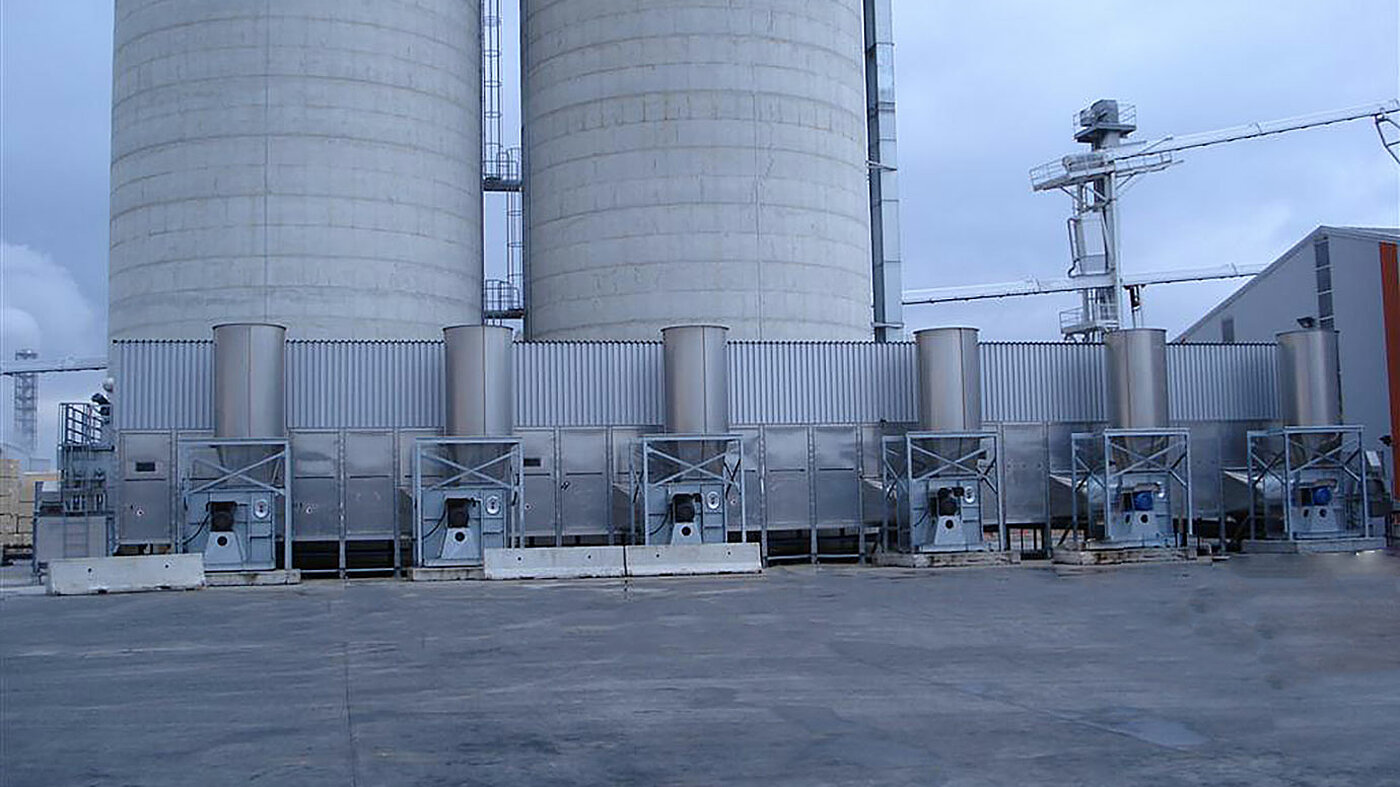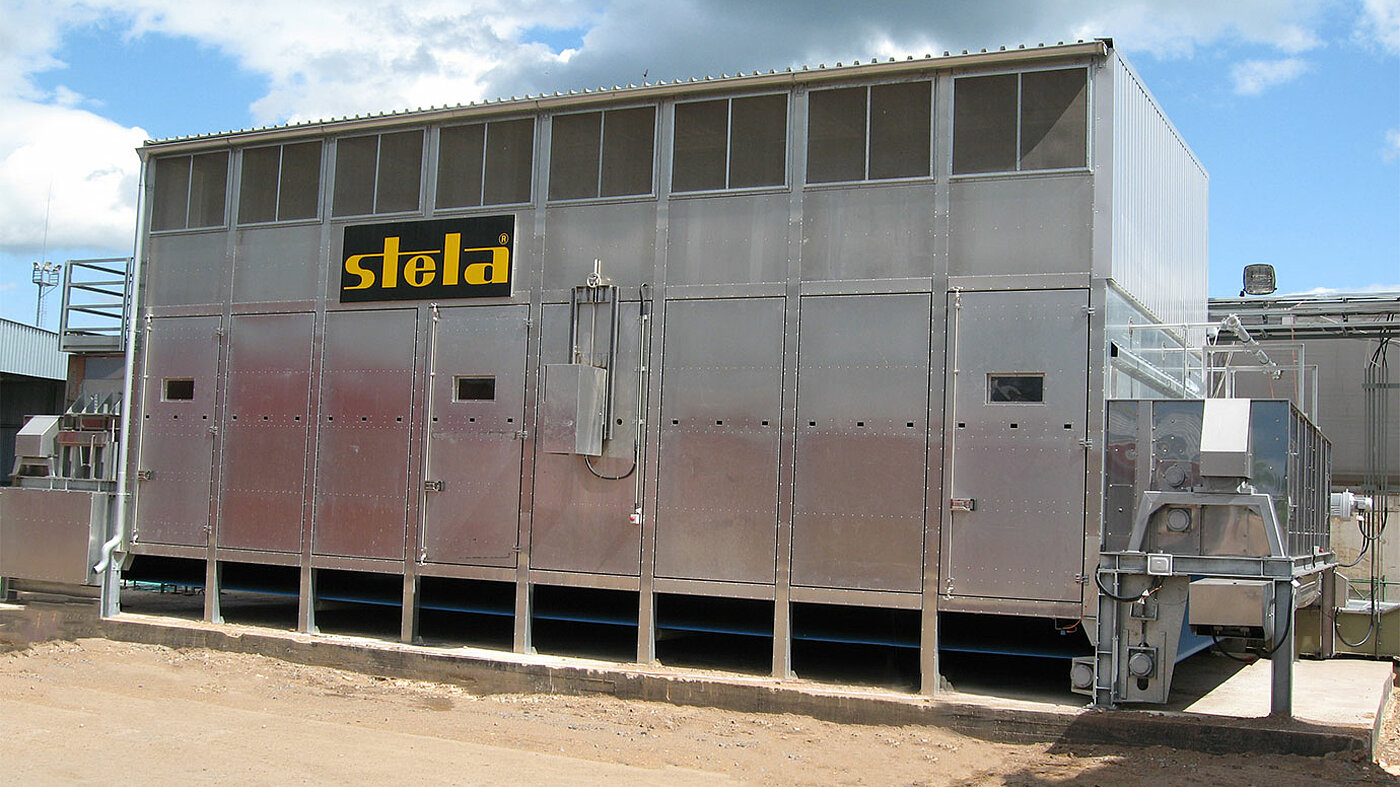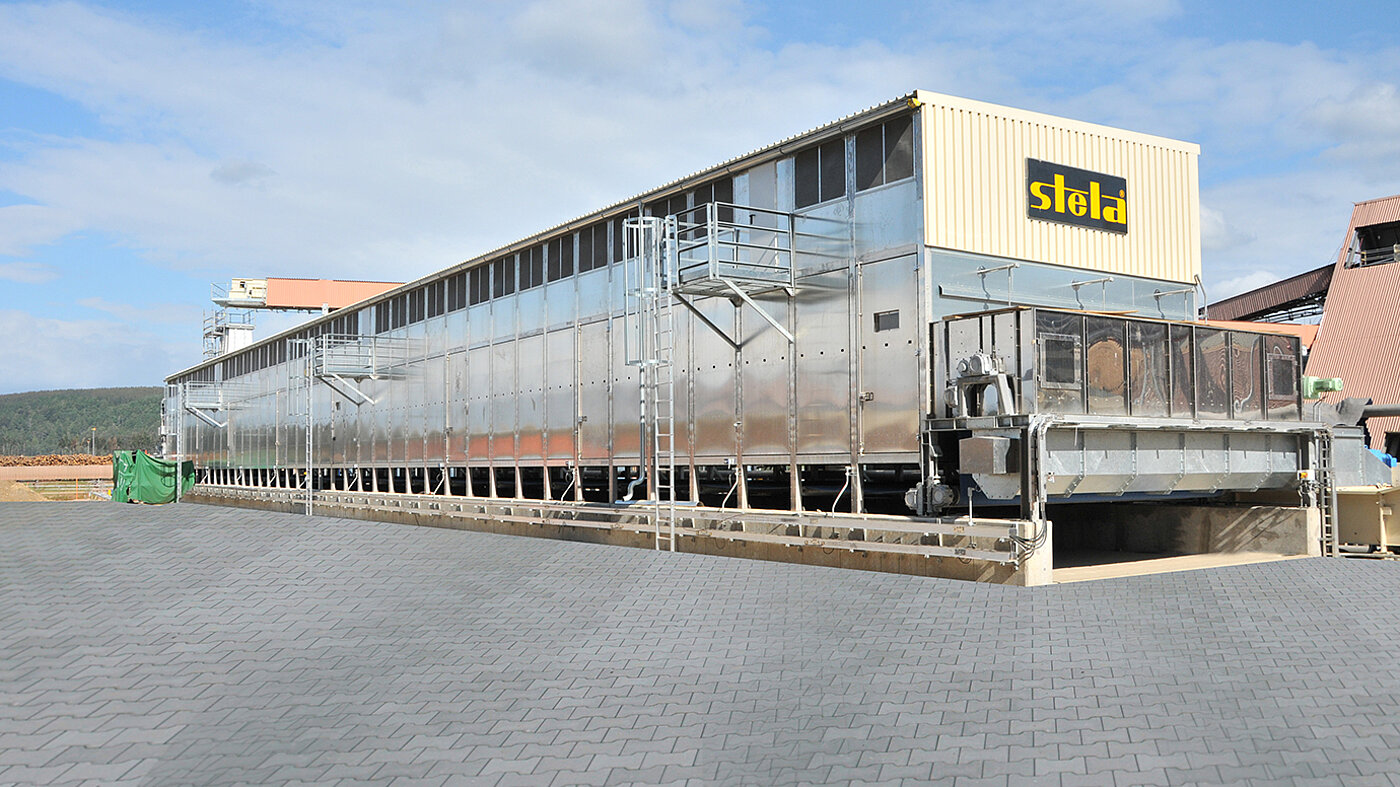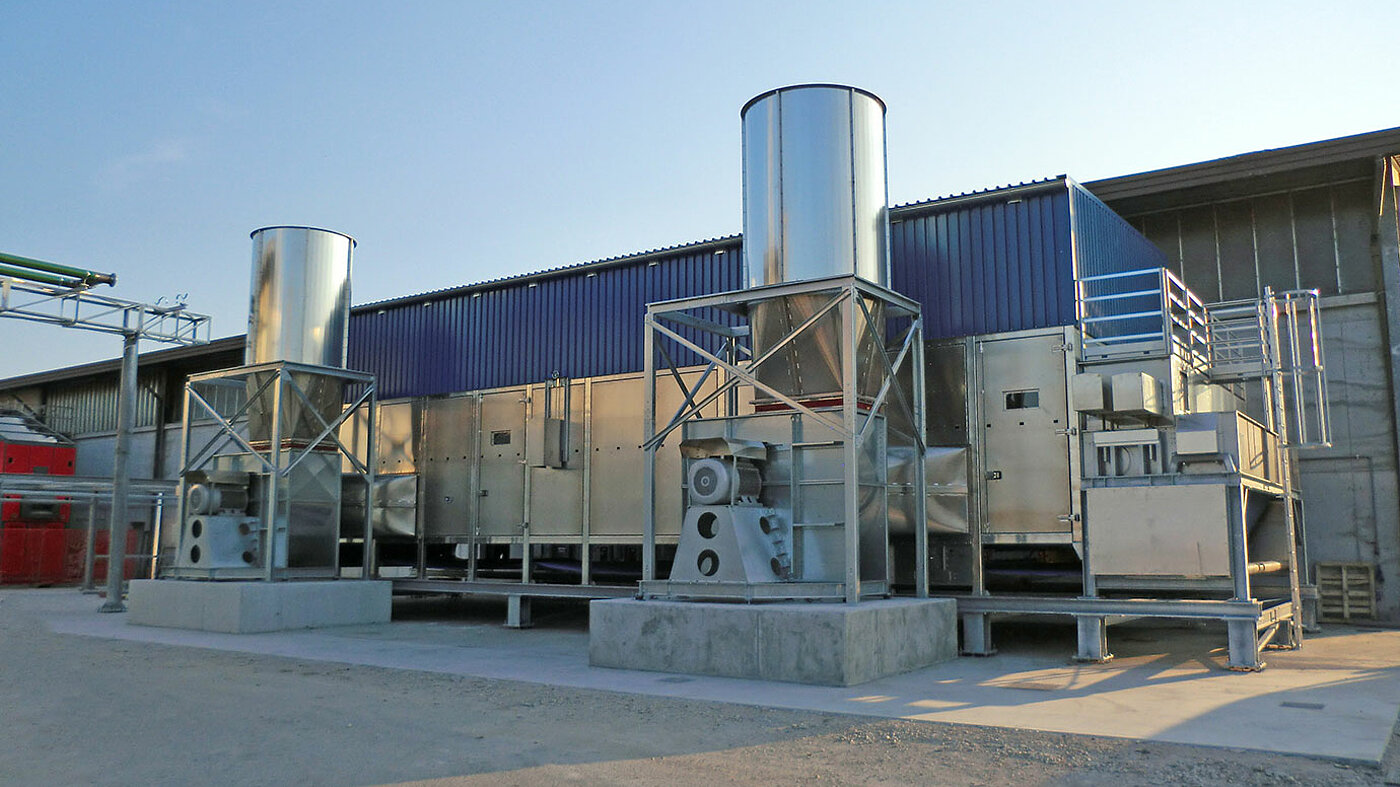







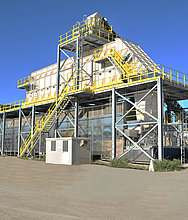
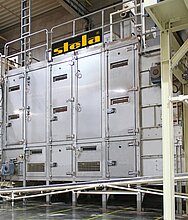
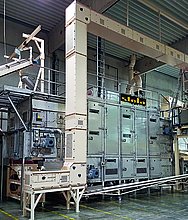
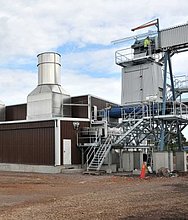
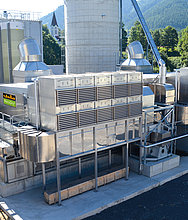
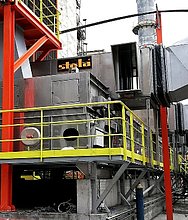
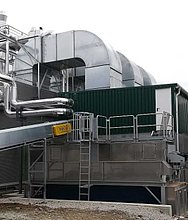
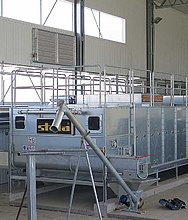
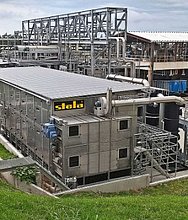
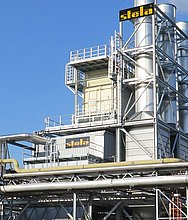
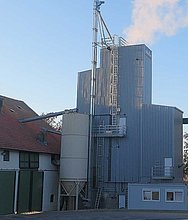
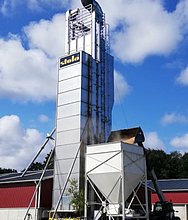

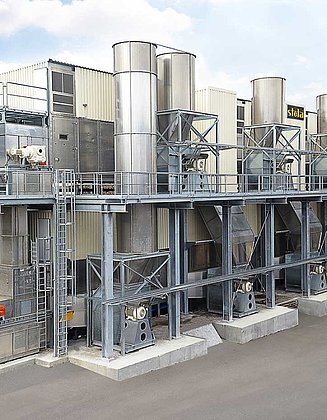
Belt dryer BT for bark
in Sweden
Dryer type: BT 1-6200-49.5
Dryer output capacity:
bark: 26.6 t/h from 60% to 45%

In the wood-based panel industry, drying is a core process. Only precise control of residual moisture in chips and OSB strands enables uniform board production and minimizes waste. At the same time, rising energy costs and growing requirements for emission reduction present operators with new challenges. With its low-temperature belt dryers, STELA Laxhuber offers a proven answer: over 600 belt dryers implemented worldwide, patented heat recovery technology, and individual design for every wood type and degree of comminution.
Wood is one of the oldest materials used by humans – and one of the most innovative. While sawn timber was the dominant material until the 20th century, a multitude of board products are now indispensable in the modern construction and furniture industry: OSB, particle board, plywood, and multiplex boards offer significant advantages over sawn timber in terms of geometry, homogeneity, stability, and flexural strength.
Crucial for the sustainability of these products is the efficient use of raw materials as well as the use of secondary raw materials, such as residual wood and waste wood. The wood-based panel industry thus enables cascading resource use and makes an active contribution to the circular economy – a characteristic that is gaining increasing economic importance in the context of EU taxonomy and sustainability reporting.

Wood is subject to fluctuations in moisture, strength, and structure. To create a homogeneous material for demanding end products from this, two steps are decisive: comminution and drying. STELA belt dryers process all types of wood – hardwood, softwood, and tropical woods – in varying degrees of comminution:
Sawdust – highest requirements for uniform moisture distribution
Sawdust/chips – typical input 45–55% water content, target 4–12% depending on use
Planer shavings – lighter and more voluminous, requires adjusted belt speed
OSB strands – large-format, requires special belt configuration and feeding

High-temperature processes such as drum dryers are widespread in the wood-based panel industry – but they are coming under pressure due to rising energy costs and emission regulations. Low-temperature belt dryers from STELA offer three decisive advantages over classic processes:
Product quality: The gentle heating of the product preserves the strength of the lignin and ensures a uniform final moisture content across the entire belt width – without material segregation.
Emission reduction: Lower process temperatures mean lower VOC emissions. STELA belt dryers do not require downstream exhaust air treatment systems.
Energy efficiency: Through optimal coordination of all components and – when equipped with RecuDry® – through active heat recovery from the exhaust air, thermal consumption values are achieved that drum dryers cannot reach.
STELA offers two belt dryer series for the wood-based panel industry, which differ in belt width and performance range – both with the same high quality standards and modular design.
BT belt dryer – for high production volumes
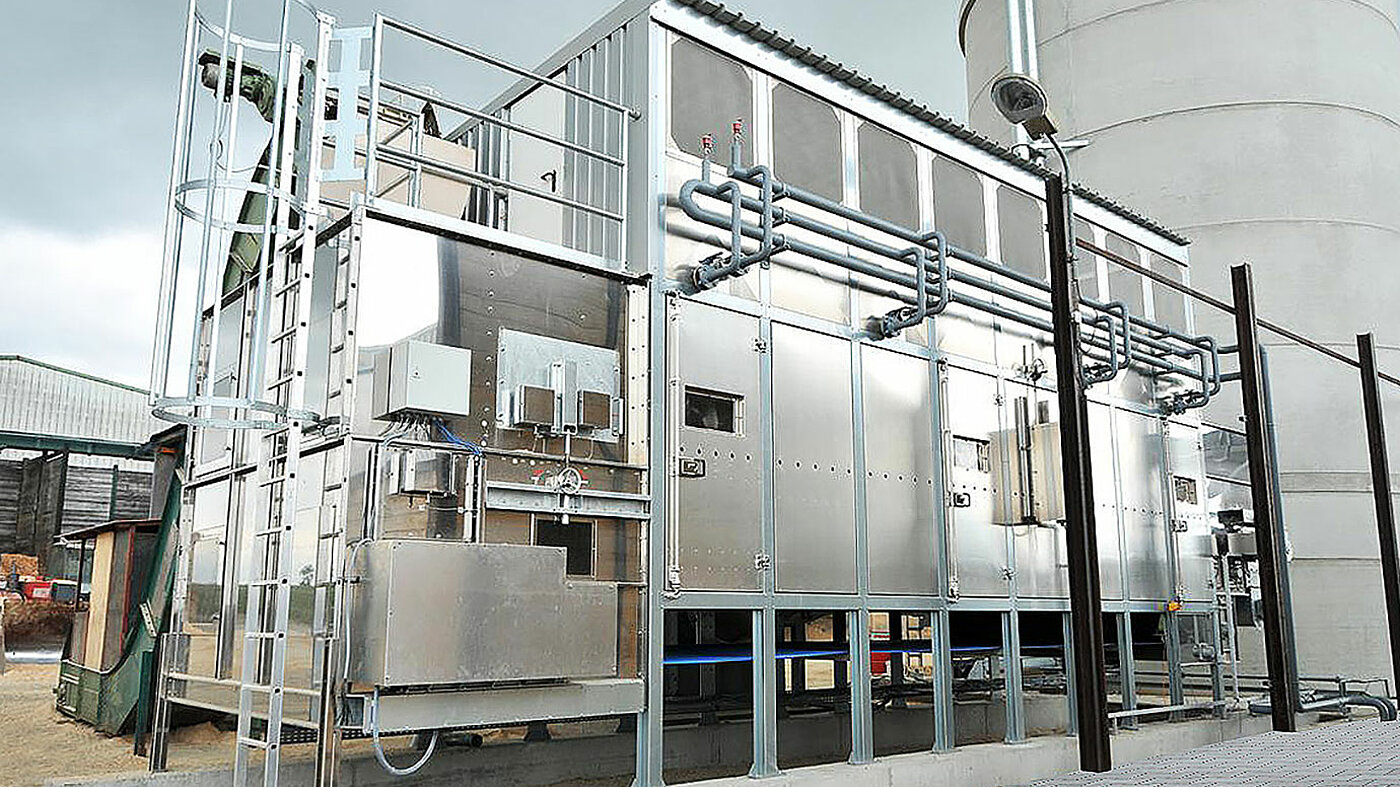
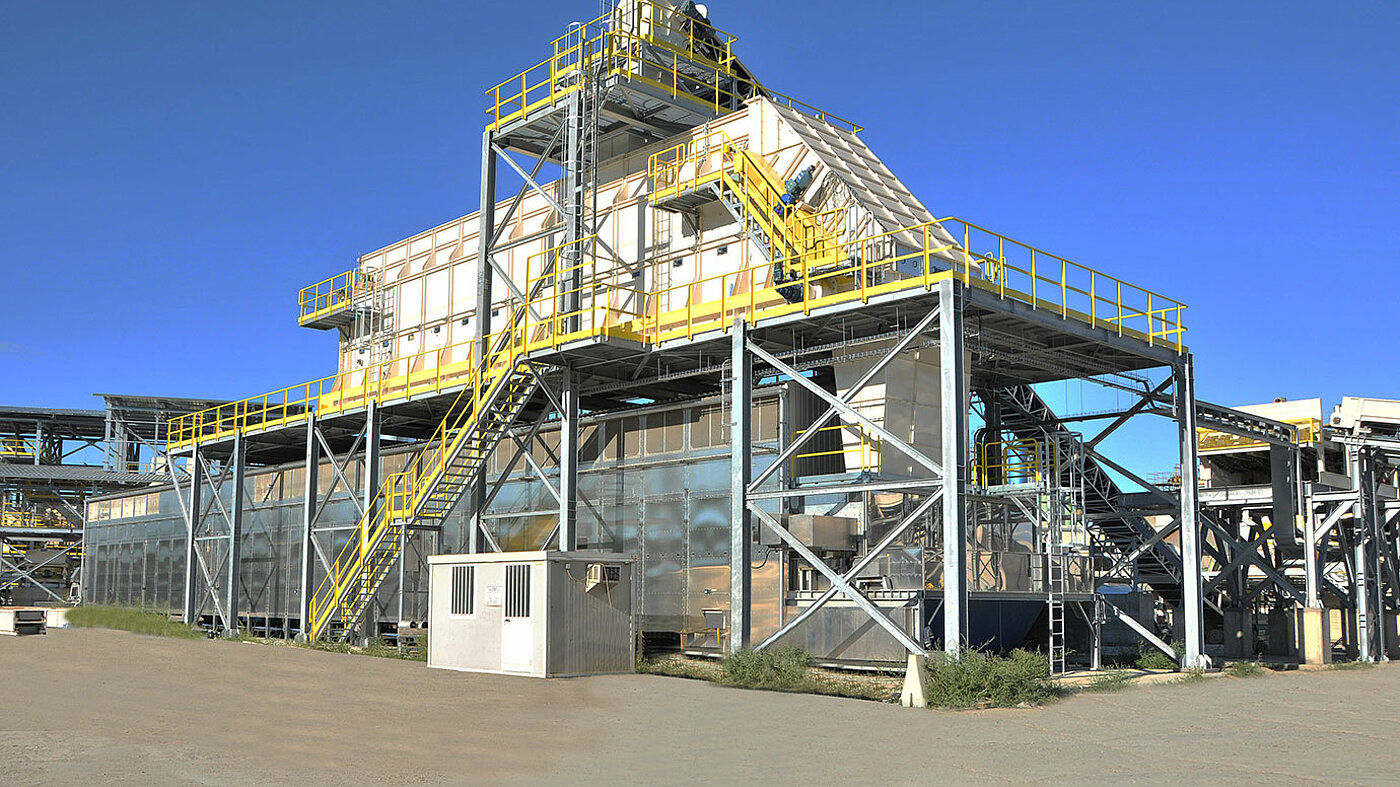
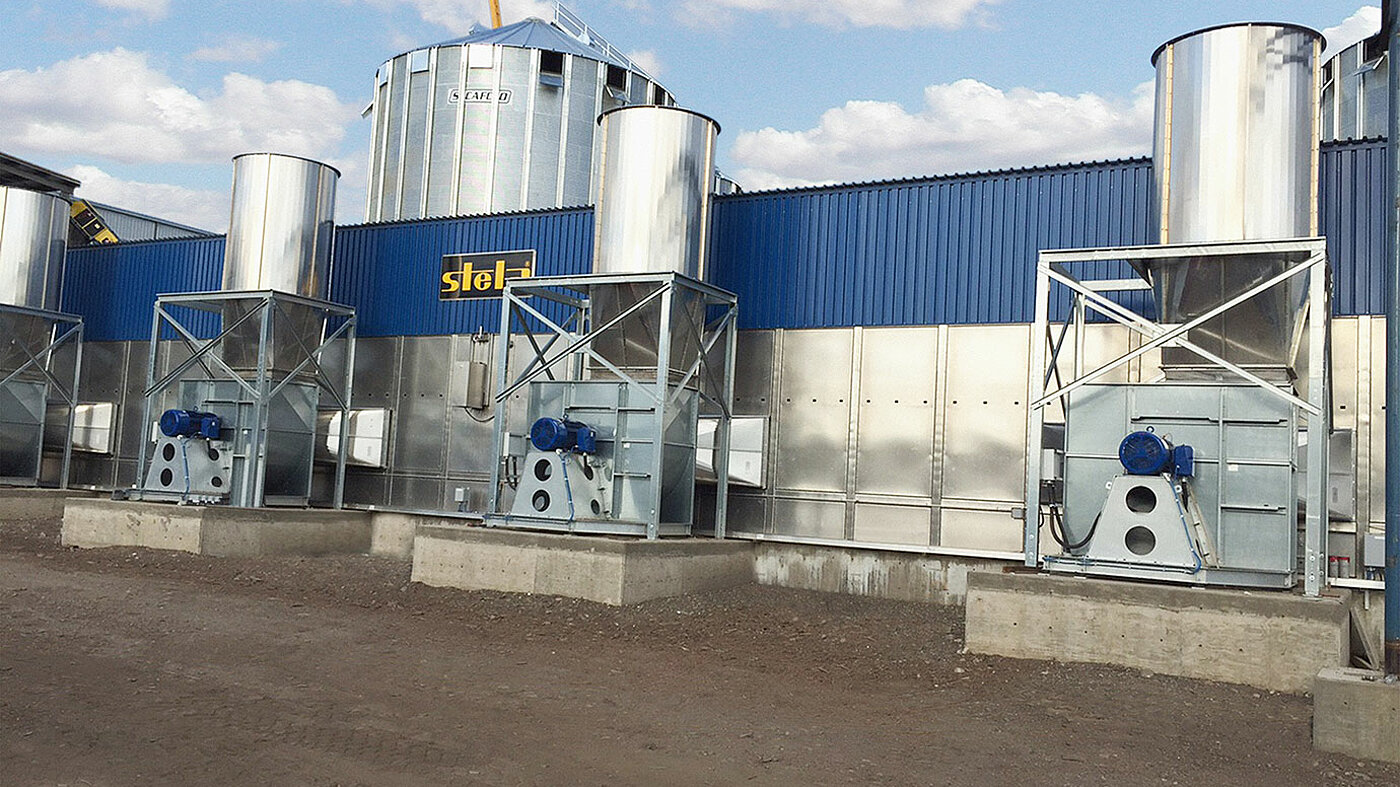
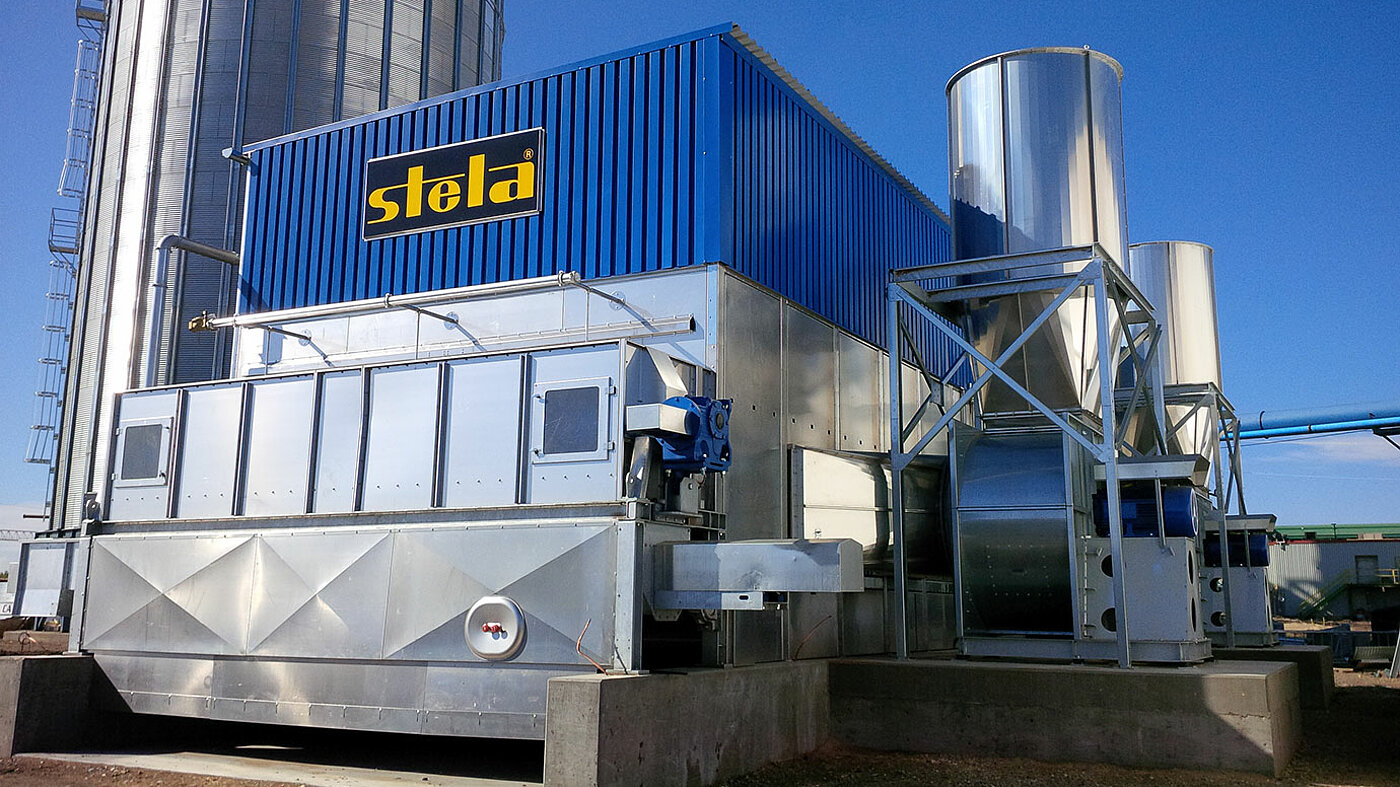
The BT is STELA's high-performance dryer for industrial customers. With belt widths from 6,200 to 8,400 mm, it achieves drying capacities that are unparalleled in the industry. Closed construction with insulation and modular design enables efficient outdoor installation; directly coupled multi-vent radial fans ensure optimal air distribution.
BTL belt dryer – for small to medium capacities
The BTL is the cost-efficient entry-level model for companies with lower throughput requirements. With belt widths from 2,000 to 3,000 mm, it is suitable for sawmills, smaller particle board producers, and companies with residual wood accumulation. Like all STELA belt dryers, it works with top-down ventilation, double distribution screws for optimal product distribution, and automatic moisture measurement.
more information:
belt dryer type BTL belt dryer type BT
A uniform drying result across the entire belt width is non-negotiable in the wood-based panel industry – moisture differences in the dried material lead directly to quality problems in board production. STELA achieves this goal through several coordinated measures:

The patented RecuDry® technology is the most important innovation in the field of belt drying at STELA. It unlocks an energy saving potential of 35 to 55% compared to a standard belt dryer – depending on the drying surface used, drying temperatures, and ambient temperatures.
How does RecuDry® work?
A conventional belt dryer completely discharges the moisture-laden exhaust air – the energy contained within it is lost. RecuDry® utilizes this energy by dividing the drying process into two specialized modules:
1. The Recu module: The process air is recirculated. This recirculated air is passed through the material bed several times, reheated to the drying temperature, and thus optimally saturated with moisture – this extracts the maximum amount of drying work (enthalpy) from it before it is passed on to the condensation module.
2. The condensation module: The high-energy Recu air, saturated with water vapor, is brought to condensation here in an air-to-air heat exchanger and preheats the ambient air with the heat released in the process.
The result: A large portion of the energy used is recovered and made available to the drying process again.
Condensate treatment – clean and low-maintenance
During condensation, condensate is continuously produced, which contains dust, resin components, and other wood constituents. STELA has developed a specially designed condensate treatment unit for this purpose: A belt filter cleans the condensate, a neutralization unit adjusts the pH value, and excess is discharged via the sewage pipe. The treated condensate is reused for cleaning the heat recovery system – a closed loop that functions with low maintenance and durability.
RecuDry® Advanced – for maximum savings
With the RecuDry® Advanced system, energy savings of up to 55% can be achieved by further increasing the drying surface. Furthermore: Existing standard belt dryers can be retrofitted with the RecuDry® system – an economically attractive option for companies that want to modernize their existing plant.
STELA belt dryers are designed for a variety of heat sources, which facilitates integration into existing energy systems:
Especially in the wood-based panel industry, the use of waste heat from biomass from one's own production is a good option – bark, sawdust, and residual wood can be burned to heat the drying plant, thus achieving a nearly closed energy cycle.
STELA Laxhuber has implemented belt drying plants for leading wood-based panel producers worldwide. Two examples show the breadth of applications:
SWISS KRONO – Production increase through OSB double-deck dryer in Poland
For SWISS KRONO, one of Europe's leading wood-based panel manufacturers, STELA implemented an innovative expansion solution for the existing OSB production line in Zary (Poland). The existing drum dryer formed a bottleneck when drying OSB chips from 50% to 2% moisture content. STELA solved this by constructing a type BT 2/6200-39 belt dryer, which was installed as a second level above the existing dryer – a double-deck configuration that could be realized in a space-saving manner and without production interruption. The waste heat from the company's own resin plant is used as a heat source, which saves fossil fuels and improves the CO₂ balance. The system achieves a specific heat consumption of less than 1.05 MWh per ton of water and a power consumption of less than 30 kWh per ton of water – and enabled SWISS KRONO to significantly increase its OSB production capacity.

Berneck S.A. – Wood-based panel production in Brazil
For BERNECK® in Lages, Santa Catarina (Brazil), STELA developed the widest belt dryer in the company's history at the time of delivery: a type BT 1/8000-58.5-8 belt dryer with a tunnel width of 8.54 meters. The plant dries bark and wood chips with a throughput of 101 t/h from 60% to 45% residual moisture – as fuel pre-drying. A particular challenge was the construction: The plant had to be transportable in 40-foot containers and equipped with an intelligent control system that reacts to the highly fluctuating composition of the material being dried. With a maximum heat output of 27.1 MW and a water evaporation capacity of over 27.5 t/h, the project sets a new standard for large-scale plants in the Brazilian wood industry.


The final moisture content of the dried material directly determines the quality of the finished board: If the material is too moist, the glue reacts uncontrollably during pressing, "blow-ups" form in the board, and there are fluctuations in strength – scrap that cannot be tolerated in ongoing production. STELA low-temperature belt dryers regulate the final moisture content fully automatically to the exact target value – with a uniformity of +/-0.5% while simultaneously maintaining a natural, light product surface; drum dryers cannot technically achieve this, or only rarely.
The target moisture content depends on the end product and the type of glue used. The following are considered guidelines:
Drum dryers are widely used in the wood-based materials industry, but have structural disadvantages that are primarily based on rising energy costs and environmental regulations:
STELA low-temperature belt dryers operate below 120 °C and therefore generate significantly fewer VOC emissions than drum dryers – the exact difference depends on the respective wood species. Energy savings of 35–55% are achieved through the optional RecuDry® heat recovery system. The uniform flow through the belt provides a more precise final moisture content – directly measurable in less scrap and better board quality.
STELA belt dryers process all types of wood – hardwood, softwood, and tropical woods – in almost all degrees of comminution: from sawdust to wood chips and wood shavings to OSB strands. The belt configuration, feeding technology, and ventilation intensity are individually designed for the respective product.
During the drying process, naturally occurring volatile organic compounds (VOCs) are released from wood chips – terpenes, aldehyde compounds, as well as pinenes and limonenes. High-temperature drying significantly increases this release, thereby increasing the effort required for exhaust air purification and approval procedures.
STELA low-temperature belt dryers significantly reduce VOC release due to the gentle process temperatures (material heating). Exhaust air treatment systems are not required.
Yes – low-temperature drying is particularly advantageous for OSB strands. High-temperature processes can damage the strands and lead to uneven drying. The STELA belt dryer operates with gentle temperatures and a feeding system tailored to OSB strands, which avoids segregation and breakage. The result is a homogeneous final moisture content, which directly improves board quality. Typical initial values: input moisture approx. 100% oven-dry (wood moisture based on dry mass), target moisture 1.5–3% – variable depending on the requirements of further processing.
The BTL (belt width 2,000–3,000 mm) is the cost-efficient system for small to medium capacities – ideal for sawmills and smaller producers. The BT (belt width 6,200–8,400 mm) is the high-performance dryer for large industrial producers with drying capacities of over 80 t/h. Both series share the same basic technology (top-down ventilation, modular design, fully automatic operation)
RecuDry® divides the drying process into two modules: In the Recu module, a portion of the exhaust air is circulated and optimally saturated. In the condensation module, this energy-rich air is condensed, and the released latent heat is used via an air-to-air heat exchanger to preheat the fresh air. Depending on the drying area, drying temperature, and outside temperature, this results in energy savings of 35 to 55% compared to a standard belt dryer.
Existing systems can be retrofitted with RecuDry®.
The question of payback time is somewhat different in wood-based materials drying than in other industries: Drying is not an optional add-on, but an absolutely essential process step in every particleboard or OSB production line. The key economic question is therefore not “whether,” but which system represents the better investment—and here, the comparison provides clear answers.
Essentially, three types of systems compete in the wood-based materials industry: drum dryers, low-temperature belt dryers, and belt dryers with RecuDry® heat recovery.
Compared to drum dryers, stela belt dryers offer significantly lower operating costs due to lower process temperatures, reduced VOC emissions (which eliminates the need for costly exhaust air treatment), less mechanical stress and thus lower maintenance costs, as well as a more uniform final moisture content, which directly reduces scrap in panel production.
Within the belt dryer systems, RecuDry® technology offers the greatest potential for savings: With energy savings of 35 to 55% compared to a standard belt dryer, ongoing operating costs are significantly reduced—and since energy costs represent by far the largest cost component in fully automated operation, this has a direct impact on profitability. Under favorable conditions—high throughput, expensive energy, and available waste heat—the additional costs for RecuDry® can be recouped in less than 24 months.
As part of its project consulting services, stela prepares a robust cost-benefit analysis for the specific site, based on throughput, initial moisture content, available heat sources, and regional energy prices.
Wood dust is flammable and, under certain conditions, can form explosive dust mixtures. stela takes this into account when designing every system by implementing appropriate design measures, dust extraction, and monitoring systems.
As early as the sales phase, stela works with the customer to assess explosion risks as part of a CE risk assessment and defines the necessary protective measures. In the subsequent project planning phase, the system is then designed in detail, and all necessary protective measures are implemented.
Yes. STELA belt dryers can be operated with hot water, steam, as well as heat from flue gases.
Important note: Flue gases, usually with high water content from biomass combustion, are highly corrosive and are therefore not used directly as a drying medium. Usually, the customer transfers the heat from flue gases first to an intermediate medium – typically water or air – which is then fed to the belt dryer.
In the wood-based panel industry, the use of biomass waste heat from the combustion of bark, sawdust, and residual wood is a very economical solution, as the resulting residues are used directly as an energy source. In combination with RecuDry®, a nearly closed energy cycle can thus be realized.
Yes. The RecuDry® system is available as a retrofit solution for existing STELA belt dryers. A retrofit is technically possible and economically attractive, especially with rising energy costs.
As part of an individual consultation, STELA checks which savings potentials are achievable for the specific existing system.
Every system is individually designed for the drying product, the throughput requirement, and the heat source. Before project planning, STELA conducts individual drying tests in its in-house technical center to determine exact drying curves. From order placement to commissioning, the typical project duration is 10 to 15 months – depending on system size, configuration, and on-site structural conditions. For a non-binding initial assessment, please contact the STELA sales team directly.

Low temperature, continuous dryer, circulating dryer – not sure what’s the best choice for you? Our experienced colleagues will be happy to help you find the best solution for your product. Please feel free to contact us without obligation.
Telephone +49 8724 899-10
Email sales[at]stela.de