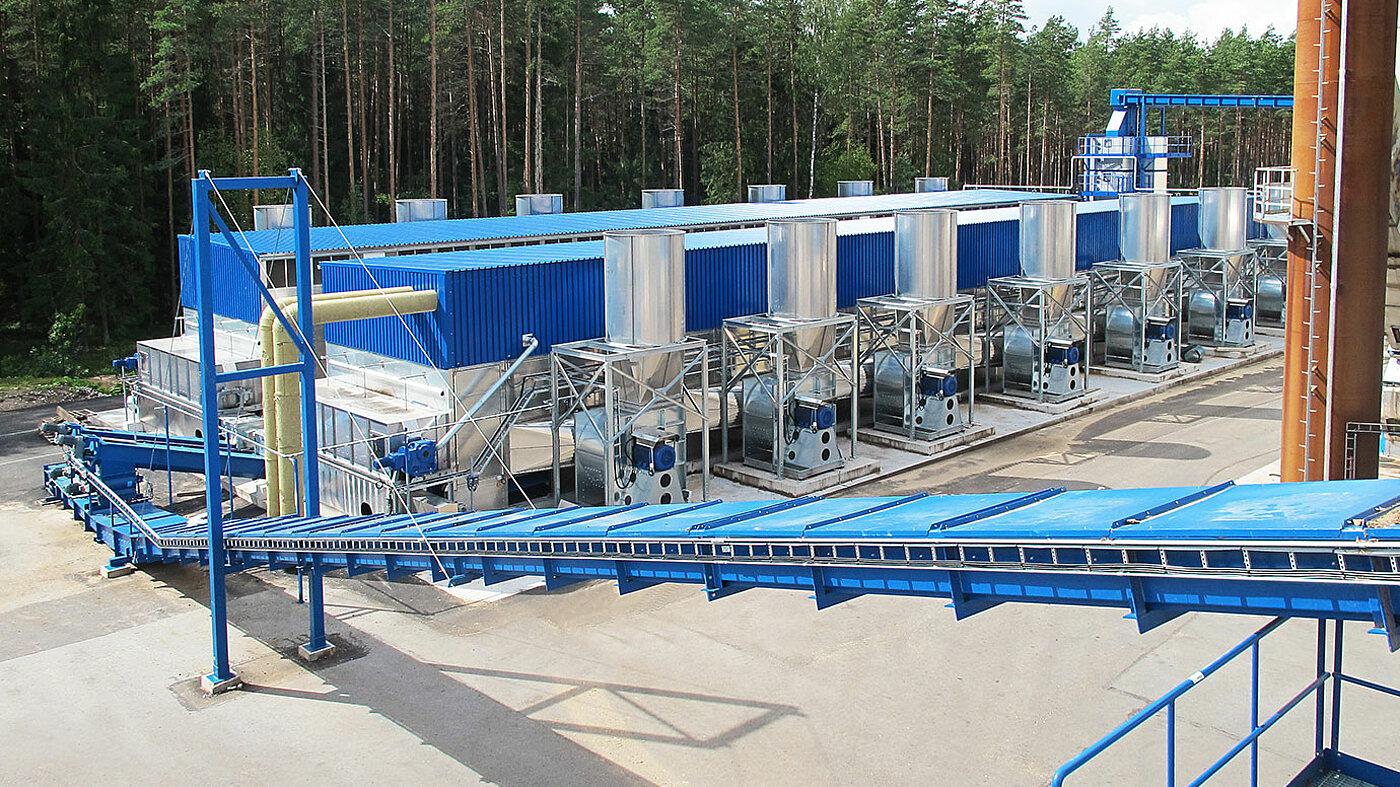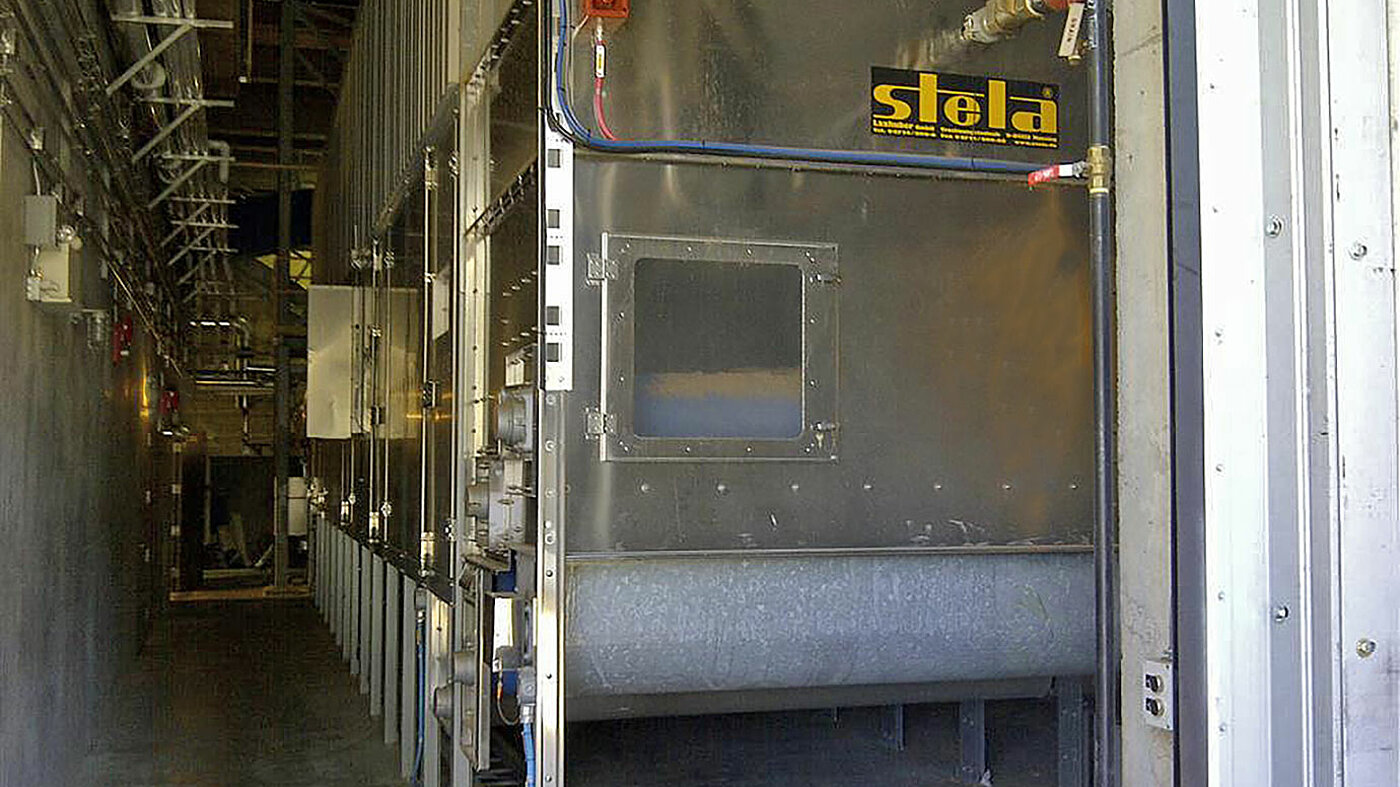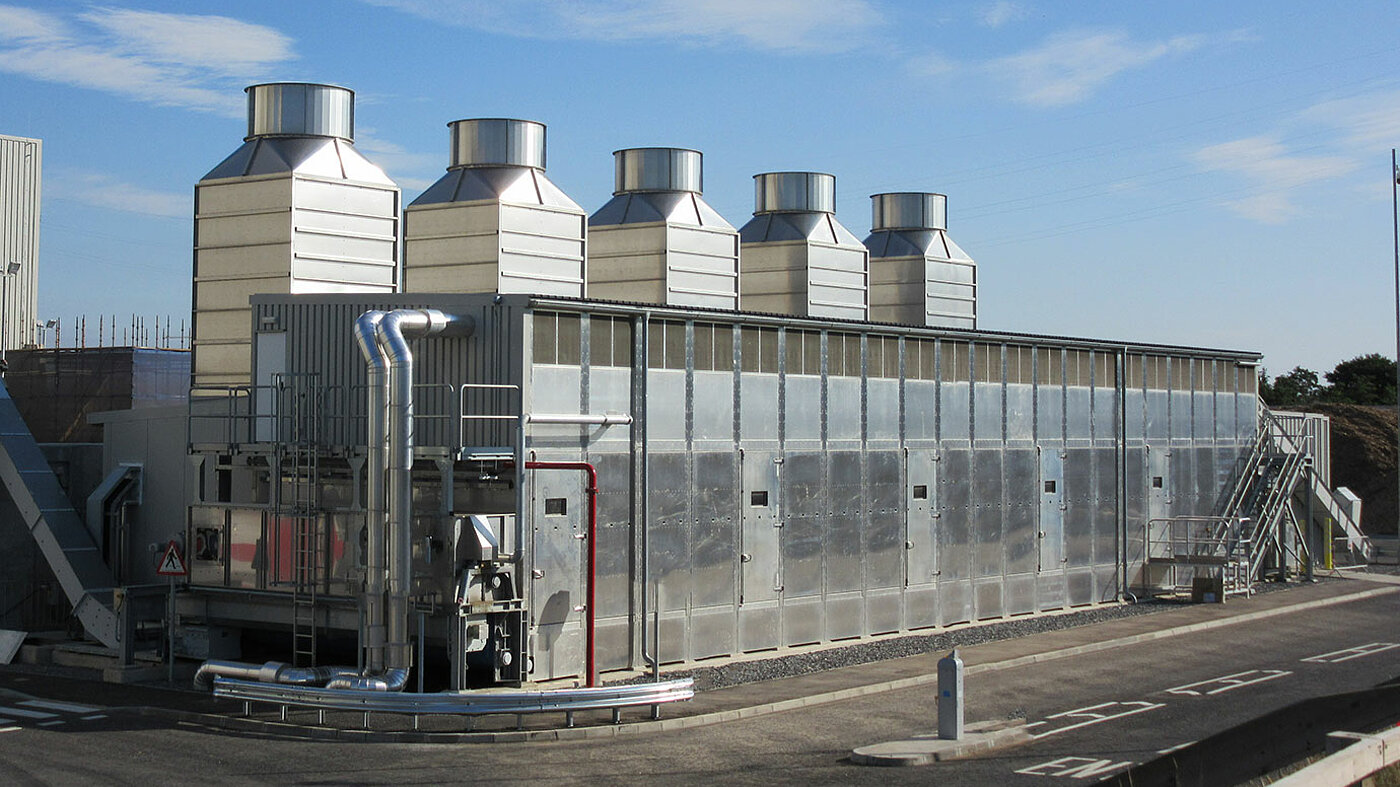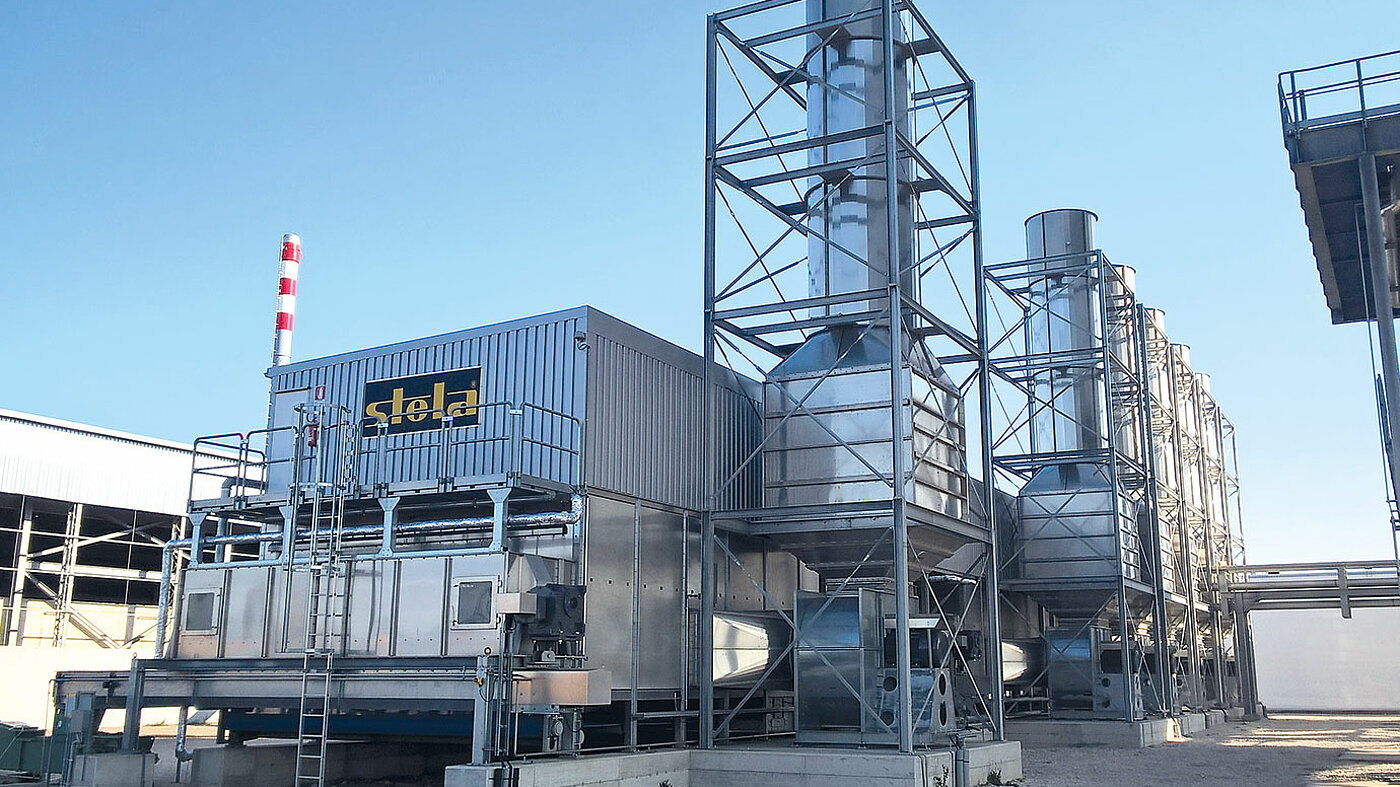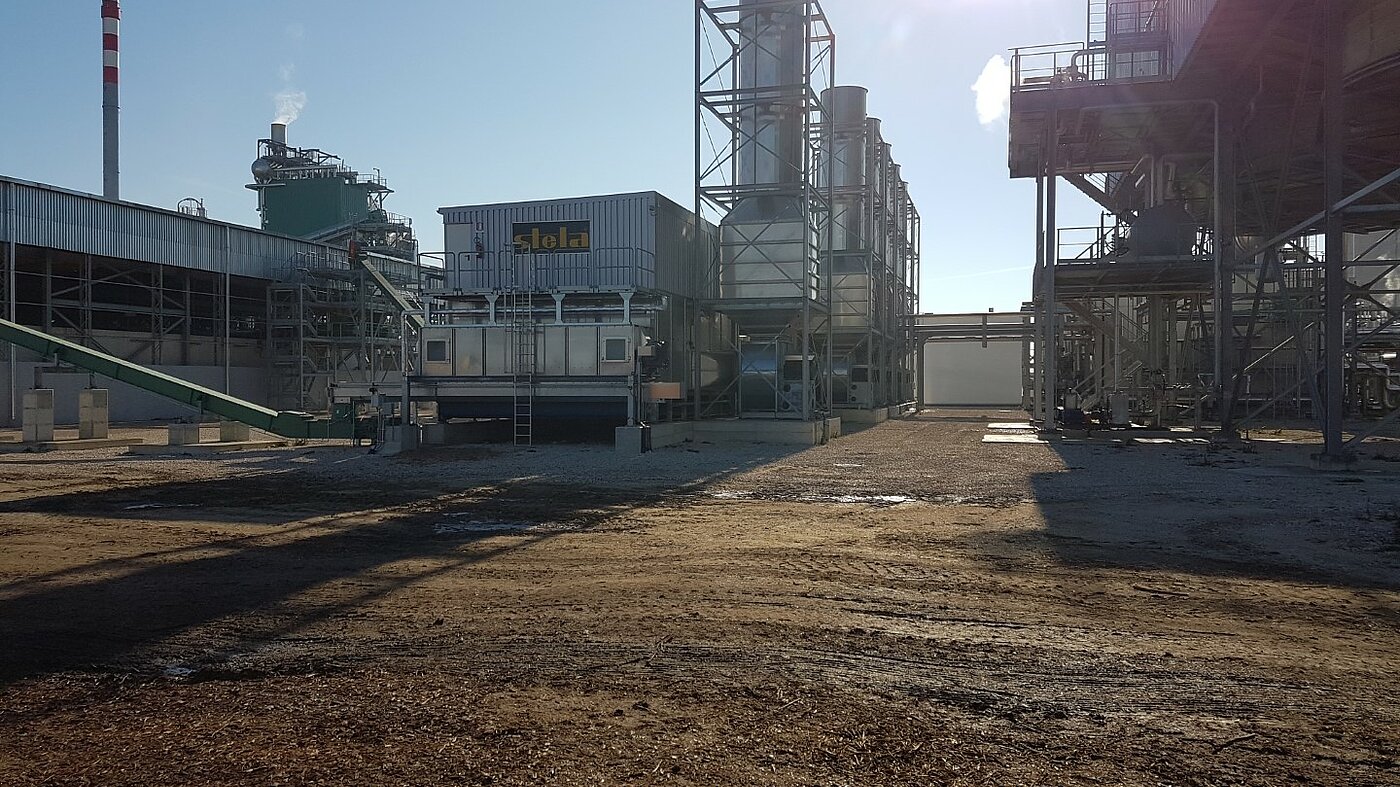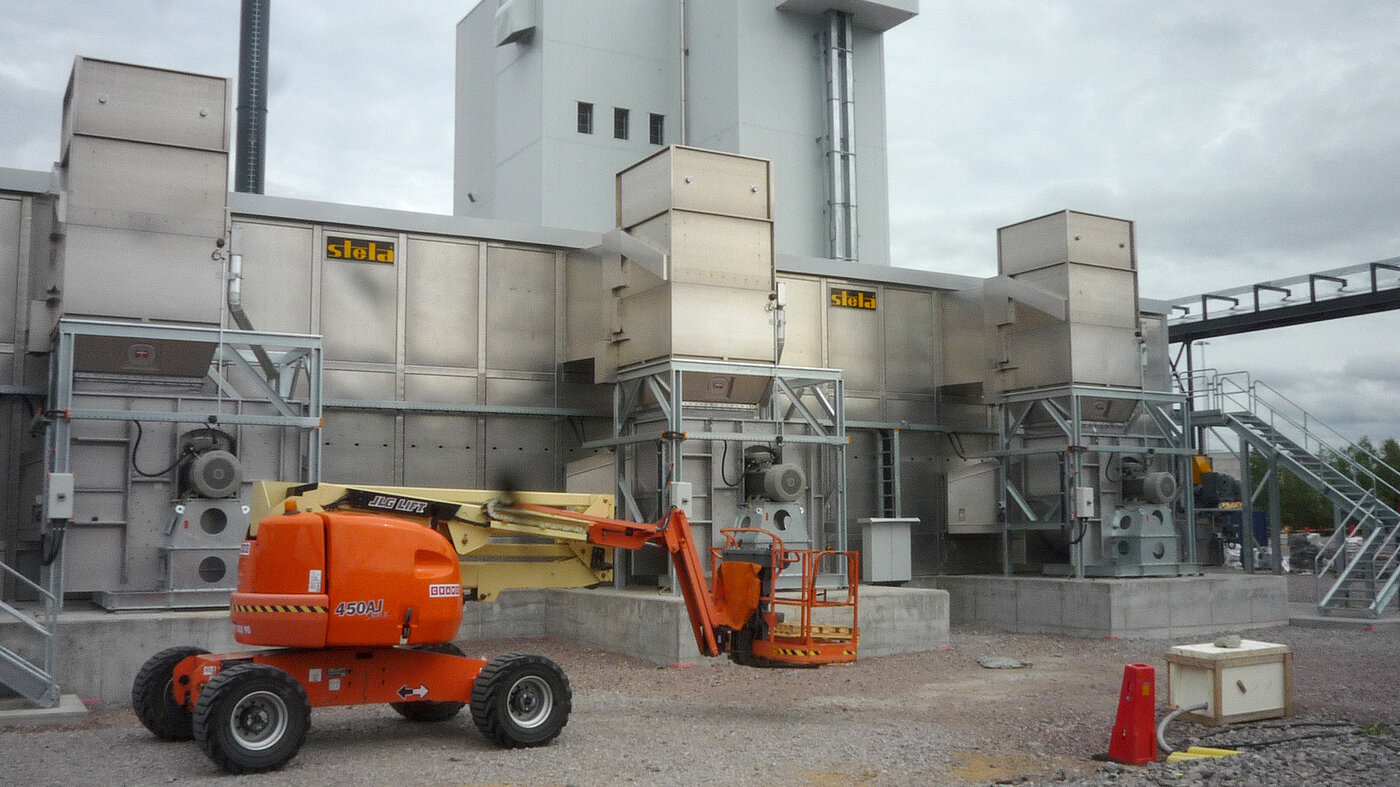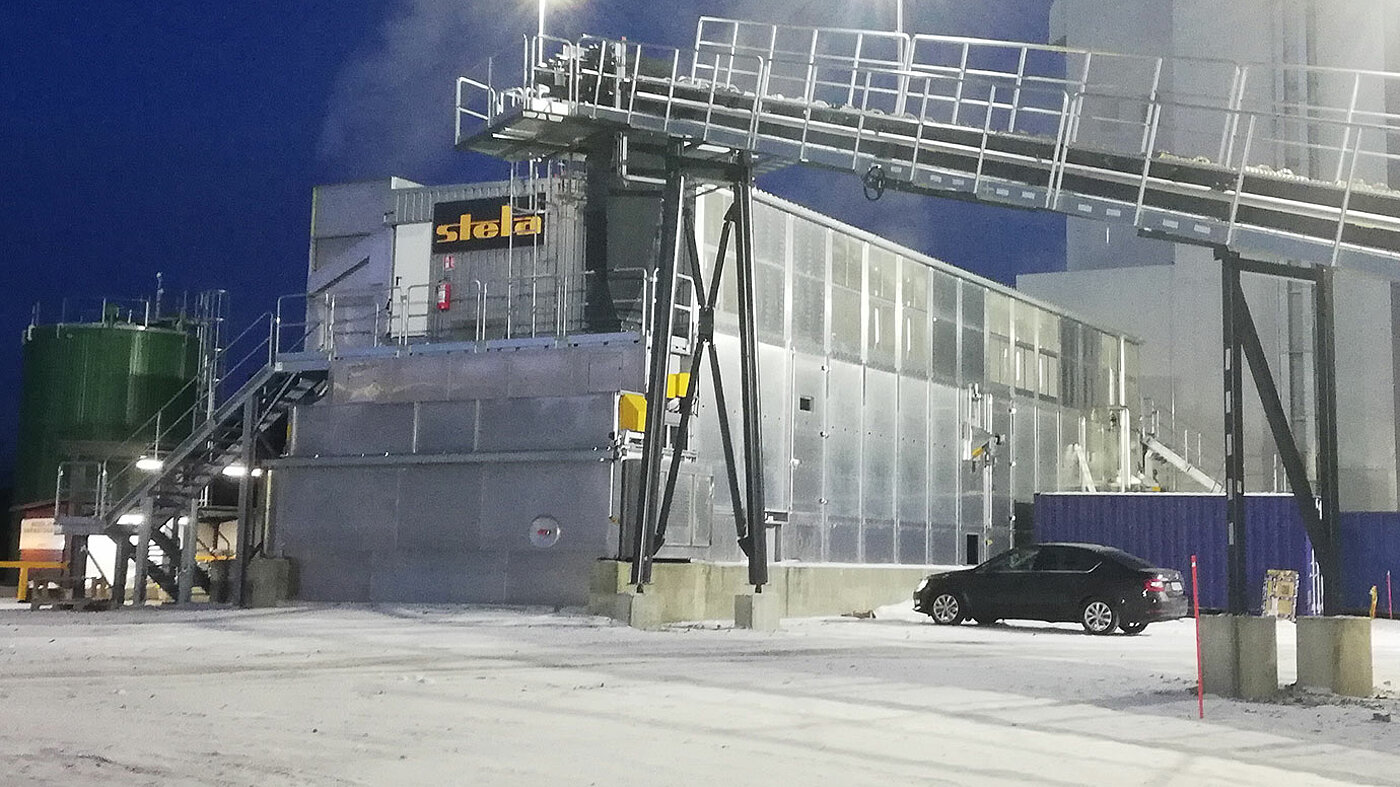







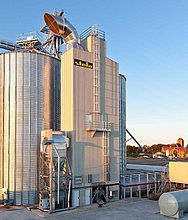
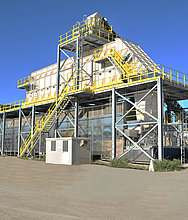
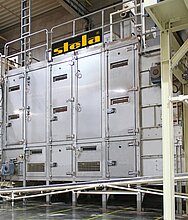
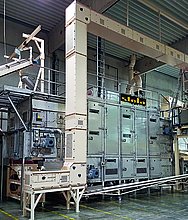
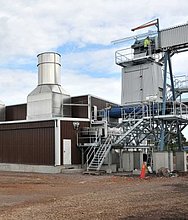
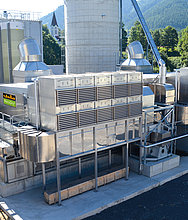
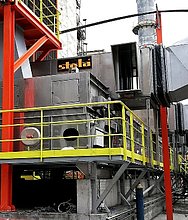
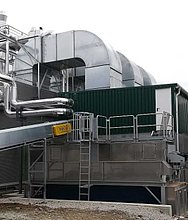
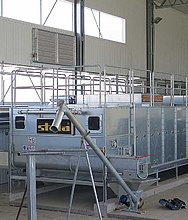
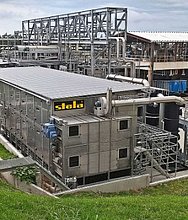
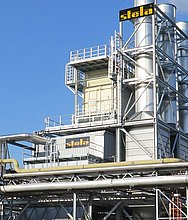
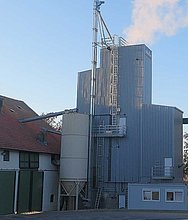
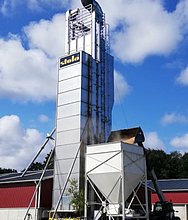

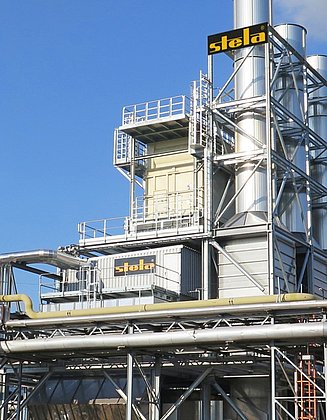
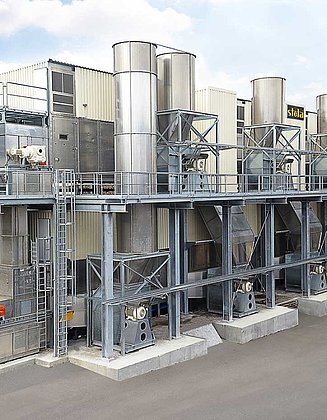
Belt dryer BT for bark and sawdust
in Chile
Dryer type: BT 1-6200-61.5
Dryer output capacity:
bark and sawdust: 46.0 t/h from 64% to 49%

Renewable fuels – from Sustainable Aviation Fuel (SAF) and bio-oil from hydrothermal liquefaction (HTL) to synthesis gas from gasification – are becoming increasingly important due to rising regulatory requirements and growing demand for decarbonized fuels for aviation and shipping. The starting point for almost every conversion process is biomass: forest residue wood, sawmill residues, bark, landscape maintenance material, or agricultural residues.
For these raw materials to be used stably and reliably in pyrolysis, gasification, or HTL plants, they must have a defined, uniform moisture content. This is exactly what the drying technology from STELA Laxhuber achieves: low-temperature belt dryers that utilize excess process heat from fuel production, run robustly in 24/7 operation, and are individually designed for the respective starting material.
Freshly delivered residual wood or other biogenic starting material often has moisture contents of 40% to over 60%. However, the downstream conversion processes – whether thermochemical (pyrolysis, gasification) or hydrothermal (HTL) – require a narrowly defined moisture range to operate stably, safely, and with maximum yield. Material that is too wet lowers the calorific value, destabilizes process control, and reduces the energy yield per ton of biomass used.
For fast pyrolysis, for example, the biomass must generally be brought to a residual moisture of less than 10% so that stable pyrolysis oil yields can be achieved and the reactor is not destabilized by excess water vapor. For gasification and HTL processes, the target moisture levels vary significantly depending on the process and plant manufacturer and should be coordinated with the plant manufacturer on a project-specific basis.
STELA belt dryers process the entire spectrum of biogenic raw materials that are suitable as feedstocks for renewable fuels:
Almost all established and emerging processes for producing renewable fuels from solid biomass require a controlled input moisture:
A central advantage of STELA drying plants in the field of renewable fuels lies in the consistent use of excess process heat. HTL, pyrolysis, and gasification plants usually generate waste heat themselves, which can be used directly for the upstream drying process – an approach that has already been successfully implemented in several STELA projects (see practical example Arbios Biotech).
Depending on the location, thermal oil, saturated steam, hot water from combined heat and power, or already heated process air are used as heating media. Important: STELA drying plants are not necessarily dependent on waste heat – they also work reliably with conventional heating media, but use existing energy streams wherever possible to reduce operating costs.
STELA offers two proven low-temperature belt dryer series for the pre-drying of biomass, both of which are based on the same process engineering principle: fresh air (or treated waste heat) is heated via a heating coil and sucked from above through an air-permeable drying belt. In the process, it extracts moisture from the material being dried; the moisture-laden exhaust air is discharged downwards. The material is fed evenly onto the belt via a double distribution screw.
Belt dryer type BT – for high throughputs
The BT is the high-performance variant for plants with large biomass throughput, such as at integrated biorefinery sites. It is available in belt widths of 6,200 mm and 8,400 mm and works with several drying zones connected in series, which allow for individually adjustable process temperatures along the drying path. A BT 1/6200-12 was, for example, realized for the pre-drying of sawmill residues (bark, sawdust, wood chips) at Arbios Biotech in Prince George (Canada) – see practical example.
Belt dryer type BTL – for small and medium throughputs
The BTL is manufactured in belt widths of 2,000 mm and 3,000 mm and is suitable for pilot plants, entering into bio-oil or synthesis gas production, as well as for decentralized drying concepts with lower or variable throughput.
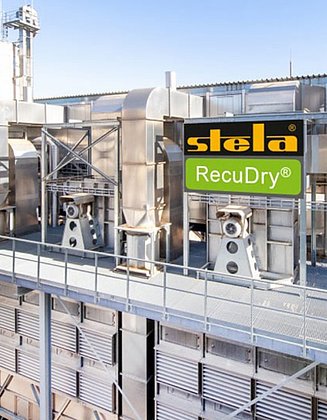
BTU RecuDry® – for maximum energy efficiency
Where there is insufficient waste heat available from the conversion process or additional energy savings are desired, the patented RecuDry® heat recovery system can be used. Depending on the drying surface, process temperature, and ambient temperature, the system unlocks an energy-saving potential of up to 55% compared to a standard belt dryer.
Both series are modular in design and can be equipped with various heating media and additional options (e.g., automatic moisture control, explosion protection based on CE risk assessment). Main components and parts in contact with vapors are made of stainless steel and aluminum; the dryers operate fully automatically without the need for manual operation. Production and control cabinet construction take place entirely at the Massing (Bavaria) plant – STELA manufactures over 80% of the components itself.
Biomass dusts are flammable and can form explosive dust mixtures under certain conditions. STELA addresses this through adapted design measures, dust extraction, and monitoring systems, as well as – where necessary – a complete explosion protection concept based on the CE risk assessment. The specific measures required depend on the drying product, dust characteristics, and local regulations, and are evaluated together with the customer during the early sales phase.
No conversion project is like another. Moisture content, material composition, available waste heat, and throughput requirements vary greatly – especially with novel processes like HTL, whose process parameters are often developed on a project-specific basis. That is why STELA develops every system based on a comprehensive analysis.
If necessary, drying trials are carried out in advance at the in-house technical center in Massing (Bavaria) to determine precise drying curves and define the optimal system configuration. This ensures not only precise dimensioning but also planning security for the customer – an important factor, especially for greenfield projects in the renewable fuels sector, where investment security is crucial.
How companies in the renewable fuels sector have solved the challenges of biomass pre-drying – and what STELA has contributed:
Arbios Biotech, Prince George (Canada) – Pre-drying of sawmill residues for the world's largest HTL plant
Arbios Biotech – a joint venture between Licella and Canfor – operates the world's largest hydrothermal liquefaction (HTL) plant with the Chuntoh-Ghuna facility in Prince George, British Columbia. The plant converts forest residues and sawmill residues into renewable bio-oil using Licella's Cat-HTR™ technology, which can be further processed into SAF as well as marine and road fuels – designed for approximately 50,000 barrels of bio-oil per year from about 25,000 tons of dry wood residues. STELA supplied a BT 1/6200-12 type belt dryer for pre-drying the feedstock (sawmill residues, particle size < 25 mm) with a throughput capacity of up to 80 m³/h and an evaporation capacity of up to 3.5 tons of water/h. The plant uses a large portion of the excess process heat from the HTL process, thereby noticeably reducing the overall energy demand of the facility.

BERNECK®, Lages, Santa Catarina (Brazil) – world's widest belt dryer for bark and wood chips for fuel pre-drying
At the Brazilian site in Lages, it is evident to what scale biogenic residues can be processed for energy use. With a tunnel width of 8.54 meters, the BT 1-8000-58.5-8 type belt dryer installed there is the widest one STELA has built to date. It processes 101 t/h of bark and wood chips and reduces their residual moisture from 60% to 45% – with a water evaporation capacity of over 27.5 t/h and a maximum heat consumption of 27.1 MW. Two requirements shaped the design: All assemblies had to be shippable to South America in 40-foot containers, and the control system had to automatically compensate for the highly fluctuating composition of the starting material. For operators who want to use biogenic residues on a large scale as fuel or as feedstock for further conversion processes, the project is a reference case for the scalability of belt drying.


Freshly delivered waste wood or other biogenic material typically has moisture contents of 40% to over 60%. However, pyrolysis, gasification, and HTL plants require a narrowly defined, uniform input moisture to operate stably and with maximum yield: Material that is too wet lowers the calorific value, destabilizes process control, and reduces the fuel yield per ton of biomass used. Drying is therefore not an optional preliminary stage, but a process-technical necessity for almost every conversion method.
The requirements differ significantly depending on the process. For fast pyrolysis, a residual moisture of less than 10% is considered a guideline for achieving stable pyrolysis oil yields. For gasification and hydrothermal liquefaction (HTL), the target values vary more depending on the plant manufacturer and process control – for HTL, for example, a more moderate pre-drying may be sufficient, as the process itself works with water as a reaction medium. STELA designs the drying plant exactly to the target value agreed upon with the plant manufacturer.
All three processes convert solid biomass into higher-energy intermediate products, but differ fundamentally in process conditions and products. Pyrolysis heats biomass in the absence of oxygen (in fast pyrolysis to around 450–600 °C) and primarily produces pyrolysis oil as well as biochar and gas as by-products. Gasification operates at higher temperatures with a limited amount of oxygen or steam and produces synthesis gas (CO and H₂) as a basis for Fischer-Tropsch fuels, methanol, or synthetic natural gas. Hydrothermal liquefaction (HTL), on the other hand, uses water as a reaction medium under high pressure and moderate temperatures and converts biomass directly into bio-oil. For drying, this difference is crucial: pyrolysis and gasification require a dry, narrowly defined input moisture (under 10% for fast pyrolysis), while for HTL – which works with water anyway – a more moderate pre-drying is often sufficient. In any case, STELA designs the drying plant to the target value agreed upon with the plant manufacturer.
Dried biomass has a higher calorific value and provides a higher, more stable yield of bio-oil, synthesis gas, or other intermediate products. The lower weight due to water removal also reduces transport costs. If the drying plant is operated – as in the Arbios Biotech practical example – with excess process heat from the conversion process itself, the operating costs of drying are additionally reduced significantly, as no additional primary energy is required.
Yes. A key advantage in the field of renewable fuels is that conversion plants often generate waste heat themselves, which can be used directly for upstream drying – as in the Arbios Biotech project, where the belt dryer uses a large part of the excess process heat from the HTL process. Furthermore, STELA belt dryers are compatible with thermal oil, saturated steam, or hot water from combined heat and power (CHP) and do not require waste heat to function – they use it, where available, to reduce costs.
STELA belt dryers process the entire spectrum of biogenic feedstocks: forest residues, sawmill residues such as bark and wood chips, landscape maintenance material, as well as agricultural residues such as straw and harvest residues. Since these materials can vary greatly in moisture, particle size, and composition depending on origin and season, an automatic final moisture control is a standard component at STELA. In the in-house technical center, drying tests can be carried out in advance to design the plant exactly for the respective material.
That depends on the respective project. In the Arbios Biotech project, the STELA belt dryer processed sawmill residues with a particle size of under 25 mm at a throughput of up to 80 m³/h. Other particle sizes and material mixtures are possible, but require project-specific adjustments to belt configuration and feeding technology – STELA provides advice on this during project planning.
Drum dryers operate with process temperatures well above 120 °C. This can entail several disadvantages for biogenic feedstocks: increased release of volatile organic compounds (VOCs), higher fire and explosion risk, and – depending on the conversion process – undesirable thermal pre-reactions in the starting material. STELA belt dryers operate in a temperature range of 60 to 120 °C, dry the material gently – the product itself typically leaves the dryer at under 40 °C – and can be operated directly with existing waste heat from the conversion process, which drum dryers often cannot do in practice. The air-permeable drying bed also acts as a self-cleaning filter, which generally eliminates the need for a separate exhaust air filter system.
The ReFuelEU Aviation Regulation mandates a gradually increasing blending mandate for Sustainable Aviation Fuel (SAF) for airlines in the EU: 2% from 2025, 6% from 2030, 20% from 2035, and 70% from 2050. A growing portion of this demand must be met via biomass-based processes such as pyrolysis, gasification, or HTL, as well as via synthetic fuels, since the use of used cooking oils (UCO) is limited by the RED III cap. This also increases the demand for efficiently pre-treated, biogenic raw material bases in the medium term – and for the drying technology required for this.
Biochar is the solid, carbon-rich by-product that is created during the pyrolysis of biomass. It is gaining economic importance because it opens up several revenue streams: as a soil improver in agriculture, as a long-term CO₂ sink in the context of carbon removal certificates, and as a reducing agent or carbon carrier in industrial processes. A prerequisite for stable biochar quality—as it is for high pyrolysis oil yields—is a defined, low input moisture content of the biomass. This is precisely where pre-drying with a STELA belt dryer comes in: it brings the starting material uniformly to the moisture range required by the pyrolysis process. Whether and to what extent STELA can also handle the post-drying or conditioning of the finished biochar must be clarified on a project-specific basis.
Biomass dusts can form explosive dust-air mixtures during the drying process. STELA takes this into account through adapted design measures, dust extraction, and monitoring systems, and—where necessary—through a complete explosion protection concept based on the CE risk assessment. The specific measures required depend on the drying product, dust characteristics, and local regulations, and are evaluated together with the customer during the early sales phase.
A blanket statement is not possible without concrete project data—the decisive factors are throughput, input moisture, available waste heat from the conversion process, and the market value of the fuel or intermediate product produced. If the drying plant can be operated with excess process heat—as in the Arbios Biotech project—the additional energy requirement drops significantly, which has a positive effect on the payback period. STELA prepares an individual profitability calculation as part of the project consultation.
The BT (belt widths of 6,200 and 8,400 mm) is the high-performance dryer for plants with large biomass throughput, such as at integrated biorefinery sites—a BT 1/6200-12, for example, is in use at Arbios Biotech. The BTL (belt widths of 2,000 and 3,000 mm) is suitable for pilot plants and projects with lower or variable throughput. Both types operate on the same process engineering principle and are individually configurable; if required, RecuDry® heat recovery can also be integrated.
Yes. STELA drying plants are supplied as turnkey units and can be integrated into both existing plant layouts and newly planned greenfield projects. Especially with novel conversion processes like HTL, whose process parameters are often developed on a project-specific basis, STELA works closely with the plant manufacturer to design the drying plant to precisely match the downstream process—from the initial design calculation to commissioning.
STELA belt dryers are designed for continuous 24/7 operation and typically run for 2,000 to 2,500 operating hours without interruption. The drying belt itself—with over 25 years of practical experience—has a service life of up to 40,000 operating hours and can be replaced by the operator's personnel if necessary—typically in 4 to 6 hours with a two-person team. A product change is possible without emptying the dryer, which minimizes downtime, especially with changing feedstocks. Experience shows that annual maintenance costs are around 1% of the original purchase price. For applications in the renewable fuels sector—usually in continuous shift operation—this low maintenance requirement is an important factor for the overall economic efficiency of the conversion plant.

Low temperature, continuous dryer, circulating dryer – not sure what’s the best choice for you? Our experienced colleagues will be happy to help you find the best solution for your product. Please feel free to contact us without obligation.
Telephone +49 8724 899-10
Email sales[at]stela.de